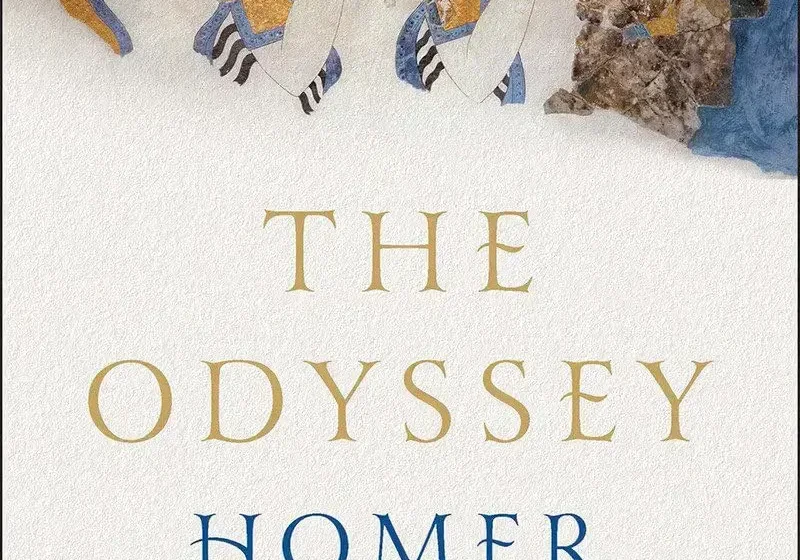

Most people approach ancient epics like they are studying for a theology exam. They expect stiff language, archaic phrasing, and a reading experience that feels more like a chore than a story.
The problem is that traditional translations often prioritize “prestige” over clarity, leaving the actual drama of The Odyssey buried under layers of academic dust.
- The Barrier: Archaic vocabulary that alienates modern readers.
- The Expectation: A slow, plodding narrative about a guy on a boat.
- The Reality: A visceral story of war, trauma, and the desperate need for home.
Emily Wilson changes the game by stripping away the pretense. She treats the text not as a museum piece, but as a living, breathing piece of storytelling.
This isn’t just another version of a classic; it is a calculated effort to make a 3,000-year-old poem feel immediate and dangerous again.
- Modern Edge: Lean language that doesn’t sacrifice the epic scale.
- Accessibility: Designed for those who hate “classic” literature.
- Impact: A translation that finally captures the “swiftness” of Homer’s original pace.
Ready to dive into “The Odyssey”?
Explore available editions, check current live pricing, or download a free sample directly on Amazon.
Preview Free Sample & Check Price on Amazon
*You will be redirected to Amazon. As an Amazon Associate, we may earn from qualifying purchases.
The “Translation Trap” and Wilson’s Solution
Most translations of Homer attempt to sound “epic,” which usually means they sound unnatural. They use ten words where three would suffice, killing the narrative momentum.
Emily Wilson takes a skeptical approach to this tradition. She uses iambic pentameter, but her idiom is contemporary and refreshingly lean.
- Directness: No more “thee” or “thou” cluttering the action.
- Rhythm: The verse sings without feeling like a forced poem.
- Clarity: The plot moves forward with the speed of a modern thriller.
The result is a text that feels unpretentious. You aren’t fighting the language to get to the story; the language is the vehicle that drives you there.
Critics and readers on platforms like Goodreads frequently note that this version removes the “academic wall” that usually protects these texts from actual enjoyment.
- Efficiency: High information density per page.
- Tone: Bold and authoritative without being arrogant.
- Flow: A seamless transition between dialogue and description.
| Feature | Traditional Translations | Emily Wilson Version |
|---|---|---|
| Vocabulary | Archaic, Formal | Contemporary, Lean |
| Pacing | Slow/Stately | Swift/Dynamic |
| Accessibility | Academic/Niche | Universal/Readable |
Odysseus
Who Should Actually Read This Translation?
This edition isn’t for the academic purist seeking archaic, dense prose. It is specifically engineered for the modern reader who wants the epic’s scale without the linguistic friction.
Emily Wilson strips away the Victorian “stiffness” often found in older versions. She delivers a lean, fast-paced narrative that respects the original rhythm while remaining transparent and accessible.
- The Casual Reader: Those intimidated by “The Classics” but curious about the hero’s journey.
- The Student: Anyone needing a version that doesn’t require a dictionary every second sentence.
- The Nolan Fan: Readers seeking the raw, human inspiration behind recent cinematic interpretations.
From a value perspective, the price-to-utility ratio is high. You aren’t just buying a story; you’re getting a curated scholarly package with maps and a pronunciation glossary.
The inclusion of extensive notes ensures you don’t get lost in the Bronze Age milieu. It transforms a daunting 592-page poem into a manageable, guided experience.
- High Value: Comprehensive introduction and essential navigational tools (maps).
- Low Friction: Iambic pentameter that feels natural, not forced.
- Durability: A paperback build that handles frequent referencing well.
Who Should Skip This Book?
If you are looking for a quick summary or a condensed manual on Greek mythology, this is not it. This is a full-length epic poem, not a cliff-notes version.
Some seasoned scholars might find the “contemporary idiom” too stripped-down. If you prefer the ornate, flowery language of 19th-century translations, Wilson’s lean style will feel too clinical.
- Avoid if: You prefer “Old English” stylings and archaic vocabulary.
- Avoid if: You have no patience for the repetitive nature of ancient oral poetry.
- Avoid if: You are seeking a prose novel rather than a verse translation.
Quick Reality Check (FAQ)
Is this a novel? No. It is a poem written in iambic pentameter, though it reads much more like a story than previous versions.
Is it “easy” to read? Relatively. While the themes are complex, the language is intentionally unpretentious and direct.
- Language: English (Contemporary translation).
- Complexity: Moderate (aided by extensive footnotes).
- Pacing: Swift, mirroring Homer’s original momentum.
Ultimately, this is the most “human” version of Odysseus available. It removes the pedestal and lets the complicated, flawed hero speak for himself. For a balanced look at current pricing and verified buyer experiences, check the latest user reviews on Amazon.
Final Editorial Verdict
“The Odyssey” delivers on its core promise for its intended audience, offering compelling insights without fluff. As highlighted in our detailed edition breakdown, its practical depth and readability are its greatest strengths.
We also recommend checking the official Kindle sample and reader ratings before making your final purchase decision.
*You will be redirected to Amazon. As an Amazon Associate, we earn from qualifying purchases.