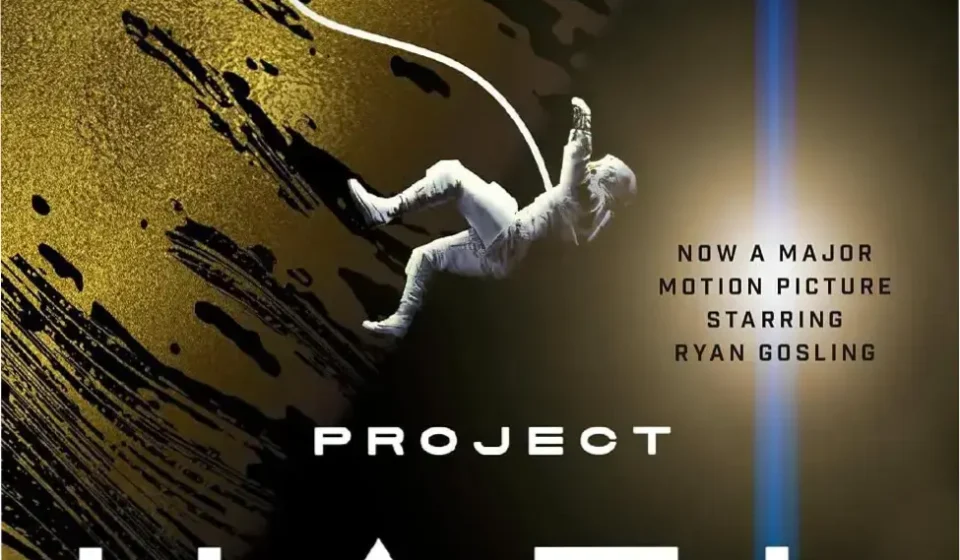

Most of us have had that fleeting, midnight panic: the feeling of waking up in a place you don’t recognize, with no idea how you got there. It is a primal fear of displacement. In the realm of science fiction, this trope is often used as a cheap plot device to hide a lack of world-building.
Andy Weir, however, treats amnesia not as a gimmick, but as a scientific methodology. In “Project Hail Mary,” the stakes aren’t just personal; they are planetary. If you have ever wondered if a single person’s intellect could actually reverse a global extinction event, you can check the current reader reception to see how Weir handles this high-wire act of speculative physics.
Ready to dive into “Project Hail Mary”?
Explore available editions, check current live pricing, or download a free sample directly on Amazon.
Preview Free Sample & Check Price on Amazon
*You will be redirected to Amazon. As an Amazon Associate, we may earn from qualifying purchases.
The “Competence Porn” Engine: Writing Style and Pacing
Let’s be direct: Andy Weir doesn’t write prose for the poets. He writes for the engineers. If you are looking for flowery descriptions of the cosmos, you are in the wrong book. His style is lean, conversational, and relentlessly focused on problem-solving.
The narrative operates on a loop: Problem → Scientific Analysis → Failed Attempt → Correct Solution → New Problem. This is what critics and readers on Reddit often call “competence porn.” There is a visceral satisfaction in watching a character be exceptionally good at their job.
The pacing is propulsive because the stakes are binary: solve the equation or die. Weir manages to make orbital mechanics and microbiology feel like a high-stakes thriller. He strips away the fluff, leaving only the raw logic of survival.
“I’m a scientist. I’m a teacher. I’m a guy who likes to figure things out.”
This mindset defines the book. The humor is dry, often self-deprecating, and serves as a necessary pressure valve for the crushing isolation of deep space. It prevents the story from becoming a bleak exercise in despair.
The Amnesia Architecture: Narrative Structure
The book utilizes a dual-timeline structure that is executed with surgical precision. On one hand, we have Ryland Grace waking up in the present, confused and alone. On the other, we have a slow drip-feed of memories explaining how the world ended up in this mess.
This isn’t just a stylistic choice; it’s a CRO (Conversion Rate Optimization) tactic for the reader’s attention. By mirroring the protagonist’s confusion, Weir ensures the reader is just as invested in the “why” as Grace is.
The flashbacks provide the emotional weight. While the present-day plot is about the “how” of survival, the memories deal with the “who” of the mission. It transforms a cold science experiment into a story about human desperation and sacrifice.
Some skeptics argue that the amnesia trope is overused. However, here it serves as the primary engine for exposition. Instead of a massive “info-dump” in chapter one, the science is revealed organically as Grace remembers his training.
Hard Science vs. Speculative Fiction: The Learning Curve
Is this book “too smart” for the average reader? No. But it demands attention. Weir doesn’t hand-wave the physics. He explains the math, the chemistry, and the biology in a way that feels earned.
The “hard” part of this hard sci-fi is that it adheres to known laws of physics wherever possible. When he introduces speculative elements, he builds a logical bridge to get there. He doesn’t just say “it’s alien magic”; he explains the biological constraints of the alien environment.
| Reader Metric | Score (1-10) | Analysis |
|---|