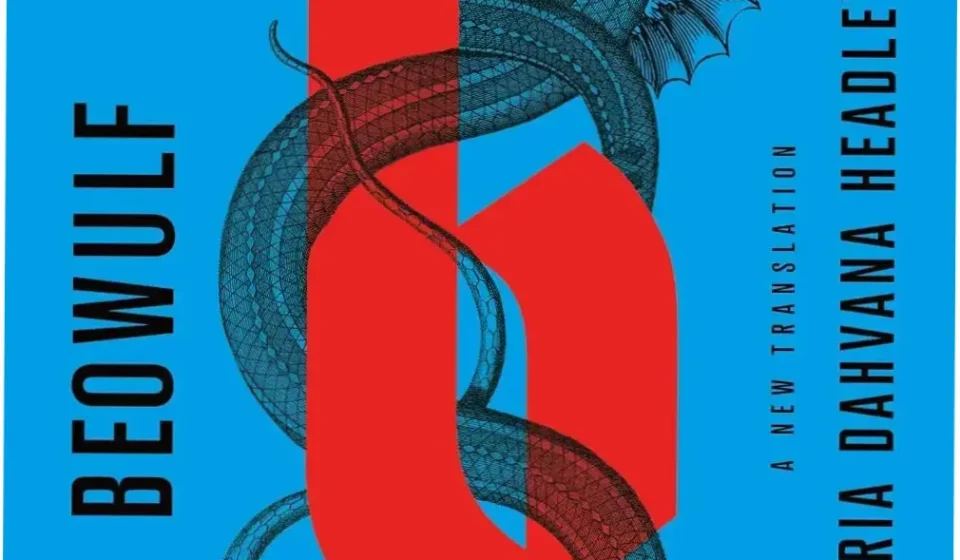

Most people remember Beowulf as the catalyst for a thousand high-school naps. For decades, the epic has been presented as a sterile museum piece—a dusty chronicle of masculine bravado and monster-slaying that feels entirely disconnected from the modern psyche.
The problem isn’t the story; it’s the translation. We’ve been fed versions that sanitize the grit and ignore the underlying power dynamics. If you’ve ever wondered why a poem about a guy fighting a swamp monster is considered a masterpiece, you might want to examine how Maria Dahvana Headley re-engineers this narrative to fit the 21st century.
Headley doesn’t just translate words; she translates attitudes. She treats the original Old English not as a sacred relic, but as a living, breathing, and often arrogant piece of propaganda. By injecting modern slang and a feminist lens, she forces the reader to question who the real “monsters” are in a society built on entitlement and encroachment.
Ready to dive into “Beowulf: A New Translation”?
Explore available editions, check current live pricing, or download a free sample directly on Amazon.
Preview Free Sample & Check Price on Amazon
*You will be redirected to Amazon. As an Amazon Associate, we may earn from qualifying purchases.
The Language Gamble: Profanity as a Tool
Let’s be direct: this translation is brash. Headley uses obscenities and social-media-style shorthand. To a purist, this is heresy. To a realist, it’s a stroke of genius.
Old English was not “polite.” It was a warrior culture defined by boasts, insults, and raw power. By using contemporary grit, Headley captures the energy of the original rather than just the literal meaning.
The pacing is breathless. She strips away the archaic “thees” and “thous” that act as a barrier between the reader and the action. The result is a text that reads less like a poem and more like a high-stakes political thriller.
However, the “internet-speak” is a polarizing choice. Some readers on Goodreads argue it dates the book too quickly. Others claim it’s the only way to make the boastful nature of the Geats feel authentic to a modern ear.
Flipping the Binary: Monsters and Heroes
The core of Headley’s work is her feminist recontextualization. In traditional translations, Grendel’s mother is often depicted as a mindless beast. Headley sees her differently: as a mother seeking justice for her murdered son.
This shift changes everything. Beowulf is no longer just a shimmering hero; he becomes a symbol of entitlement. He is the “strong man” entering a territory that isn’t his, claiming victory through violence, and calling it “glory.”
“Beowulf has always been a tale of entitlement and encroachment, powerful men seeking to become more powerful.”
By blurring the line between the hero and the monster, the book becomes a critique of gender and power. It asks a vital question: is the monster the one who attacks, or the one who justifies the attack in the name of “heroism”?
This perspective doesn’t just add a political layer; it adds emotional depth. The narrative becomes a tragedy of cycles—violence begetting violence—rather than a simple victory lap for a legendary warrior.
Technical Breakdown: Tradition vs. Headley
To understand the impact of this version, you have to see it against the backdrop of what we’re used to. Most translations focus on the “epic” scale. Headley focuses on the “human” cost.
| Feature | Traditional Translations | Headley’s Translation |
|---|---|---|
| Tone | Formal, Archaic, Reverent | Brash, Modern, Skeptical |
| Gender Lens | Passive female roles | Active, Feminist critique |
| Vocabulary | Literary and Elevated | Colloquial and Raw |
| Perspective | Beowulf as the Absolute Hero | Beowulf as a Complex Power-Player |
Reading Difficulty and the Learning Curve
If you’ve struggled with Seamus Heaney or the Tolkien translation, this will feel like a breath
Who Should Actually Read This?
This isn’t a translation for the academic purist. If you are looking for the “stately” atmosphere of a medieval hall or the rigid formality of a university textbook, stop here. You will likely find the prose jarring, if not offensive.
This version is designed for a specific profile: the reader who finds the original epic stagnant and wants to see the power dynamics stripped bare. It appeals to those who enjoy provocative literature, feminist critiques, and the intersection of ancient myth with modern social vernacular.
Skip this book if:
- You prefer “thee” and “thou” over contemporary slang.
- You believe a translation should be a transparent window to the past rather than a dialogue with the present.
- You are easily triggered by obscenities used as rhythmic punctuation.
Value for Money: The Provocation Premium
At 178 pages, you aren’t paying for volume. You are paying for a conceptual shift.
The value lies in the “unearthing.” Headley doesn’t just swap words; she swaps perspectives. She highlights the entitlement of the “hero” and the grief of the marginalized. For the price of a standard Kindle edition, you get a piece of literary disruption that wins Hugo Awards for a reason.
The biggest purchasing mistake is expecting a “simplified” version of the story. This is not “Beowulf for Dummies.” It is a sophisticated, aggressive re-imagining. It requires an active mind that is willing to be challenged, not just a passive reader looking for a plot summary.
Editorial Verdict: Risk vs. Reward
Is it a “faithful” translation? In the literal sense, it’s a gamble. In the spiritual sense, it’s perhaps more honest than versions that sanitize the violence and arrogance of the original warrior culture.
Headley succeeds in making a 1,000-year-old poem feel like a current event. By blending social-media shorthand with sublime poetry, she mirrors the chaos of the original oral tradition. It is brash, it is loud, and it is intentionally polarizing.
If you want to feel the adrenaline of the epic rather than the dust of the museum, this is the edition to get. You can verify the current sentiment and check for live discounts via the official product page.
Final Editorial Verdict
“Beowulf: A New Translation” delivers on its core promise for its intended audience, offering compelling insights without fluff. As highlighted in our detailed edition breakdown, its practical depth and readability are its greatest strengths.
We also recommend checking the official Kindle sample and reader ratings before making your final purchase decision.
*You will be redirected to Amazon. As an Amazon Associate, we earn from qualifying purchases.