
Most historical fiction about slavery focuses on the external struggle for freedom—the physical chains and the flight toward the North. But the real, silent war is often fought internally, in the fragile spaces where human dignity attempts to survive a system designed to erase it. We often ask if love is possible in a vacuum of hope, or if intimacy becomes a liability when survival is the only currency that matters.
Robert Jones Jr. doesn’t offer easy answers. Instead, he examines the intersection of desire, faith, and betrayal in a setting that feels both claustrophobic and epic. If you are looking for a sanitized version of history, this isn’t it. You can check the current reader reception and availability of The Prophets to see how this narrative challenges conventional storytelling in the genre.
Ready to dive into “The Prophets”?
Explore available editions, check current live pricing, or download a free sample directly on Amazon.
Preview Free Sample & Check Price on Amazon
*You will be redirected to Amazon. As an Amazon Associate, we may earn from qualifying purchases.
The Lyrical Weight: Prose as a Tool of Survival
The first thing that hits you isn’t the plot, but the rhythm. Jones writes with a lyricism that is intentionally dense. It doesn’t read like a standard novel; it reads like a choral arrangement or a long-form prayer.
This style serves a specific purpose. By elevating the language, the author restores the humanity of characters who were legally treated as property. The prose acts as a shield against the brutality of the setting.
However, from a CRO perspective on “reading flow,” this is where some readers stumble. The pacing is slow. It doesn’t rush toward a climax; it lingers in the emotional residue of every interaction.
“Isaiah was Samuel’s and Samuel was Isaiah’s.”
This simple repetition anchors the book. It transforms a romantic relationship into a spiritual pact. The writing doesn’t just tell you they love each other; it attempts to make you feel the gravity of that love in a world that views it as a sin.
The Architecture of Betrayal and Faith
The narrative tension doesn’t just come from the master’s whip, but from the internal fractures within the enslaved community. This is the most cynical and honest part of the book.
The introduction of a fellow slave who uses the master’s gospel to gain favor is a masterclass in psychological conflict. It explores how power dynamics are replicated even among the oppressed.
Faith is portrayed as a double-edged sword. For Samuel and Isaiah, it is a source of hope. For others, it is a tool of control and a justification for betrayal. The book asks: who owns the truth when the storyteller is also a victim?
| Core Element | Impact on Narrative | Reader Experience |
|---|---|---|
| Lyrical Prose | Creates a spiritual, timeless atmosphere. | High emotional gain, slower pacing. |
| Internal Conflict | Shows the complexity of survival. | Psychologically taxing but realistic. |
| Religious Tension | Challenges the role of faith in oppression. | Provocative and often uncomfortable. |
Expectation vs. Reality: The “Toni Morrison” Comparison
Critics frequently compare Robert Jones Jr. to Toni Morrison. While the influence is obvious in the cadence and the focus on ancestral trauma, the comparison can be a trap for the casual reader.
Morrison often dealt with the fragmented nature of memory. Jones, in The Prophets, is more focused on the immediate, visceral presence of the body and desire.
If you expect a plot-driven historical thriller, you will be disappointed. This is a character study wrapped in a tragedy. The “action” is found in the glances, the whispers in the barn, and the slow build of inevitable dread.
The Reader’s Divide: Analyzing the Ratings
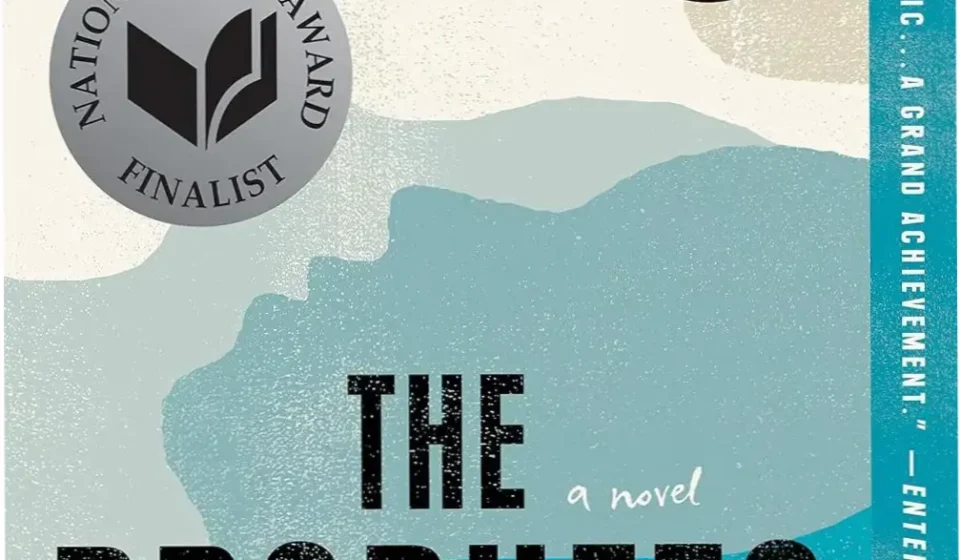
There is a noticeable gap between the critical acclaim (National Book Award Finalist) and the mixed ratings on platforms like Goodreads (3.9 stars).
Why the discrepancy? For many, the book is “too much.” The intersection of slavery, forbidden queer love, and religious betrayal creates an emotional load that some readers find suffocating.
Skeptical readers often point to the repetitive nature of the prose. What critics call “lyrical,” some readers call “redundant.” It is a book that demands total immersion; you cannot skim this
Who This Book Is Actually For
The Prophets isn’t a casual read. It’s a dense, emotionally taxing piece of literary architecture. If you gravitate toward authors like Toni Morrison or James Baldwin, this is your territory.
The ideal reader is someone who values prose over plot velocity. You should be comfortable with lyrical diversions and a narrative that focuses as much on the psychological weight of ancestral trauma as it does on the immediate action.
Who should skip this book:
- The “Fast-Plot” Hunter: If you need a linear, high-speed thriller to stay engaged, the poetic pacing here will frustrate you.
- The Sanitized History Reader: This is a raw depiction of the Deep South. It does not shy away from the brutality of slavery or the complexities of forbidden desire.
- The Romance Novelist: While it centers on love, this is not a “romance” in the genre sense. It is a tragedy and a study of survival.
Value Analysis & Realistic Expectations
Purchasing this book based solely on “Bestseller” tags is a common mistake. Many readers expect a standard historical drama, only to find a text that reads more like a choral prayer or a fever dream.
The trade-off is clear: you sacrifice speed for depth. The value here lies in the emotional resonance. Robert Jones Jr. doesn’t just tell a story; he reconstructs the atmosphere of a plantation, making the air feel heavy and the stakes feel existential.
Common Question: Is the “Morrison-esque” style a gimmick?
No. The lyricism serves a purpose. It creates a sanctuary of beauty that contrasts sharply with the ugliness of the setting. Without the poetic language, the brutality would be unbearable; with it, the story becomes a testament to human endurance.
Editorial Verdict
Ultimately, The Prophets is a high-gain investment for any serious reader of historical fiction. It succeeds because it refuses to simplify the intersection of faith, sexuality, and oppression. It is a demanding book, but the payoff is a profound understanding of how love can be both a refuge and a target.
If you are ready for a narrative that challenges your endurance as much as your intellect, we suggest you check the current reader ratings and available formats on Amazon to see if the prose style aligns with your preferences.
Final Editorial Verdict
“The Prophets” delivers on its core promise for its intended audience, offering compelling insights without fluff. As highlighted in our detailed edition breakdown, its practical depth and readability are its greatest strengths.
We also recommend checking the official Kindle sample and reader ratings before making your final purchase decision.
*You will be redirected to Amazon. As an Amazon Associate, we earn from qualifying purchases.