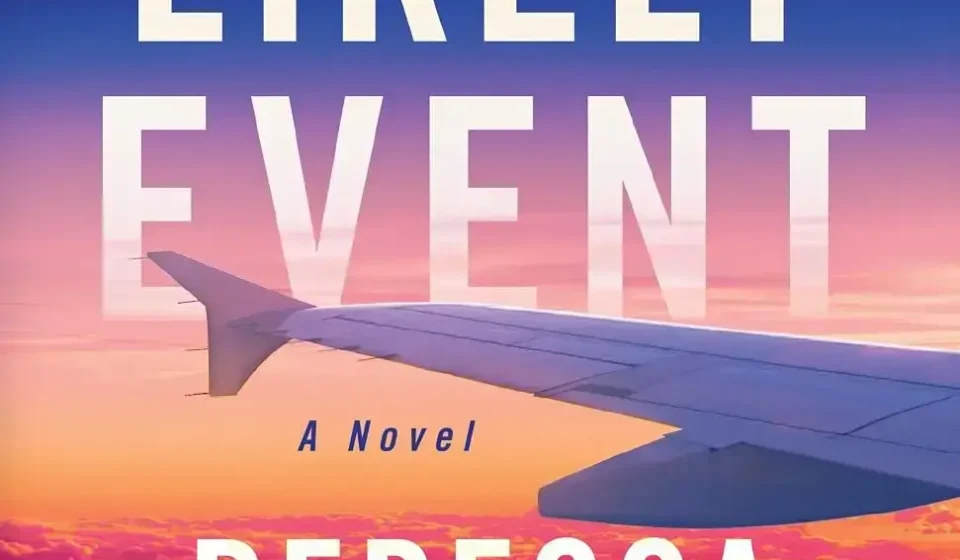

Most of us carry a “what if” story. A glance across a subway car, a brief conversation in a coffee shop, or a seatmate on a flight who feels like a soulmate before the plane even leaves the tarmac.
The danger of these narratives is the cliché. We expect a fairy tale, but reality usually offers a mess of bad timing and trauma. Rebecca Yarros explores this tension in In the Likely Event, shifting her focus from the high-fantasy dragons of her recent hits to the brutal unpredictability of human fate.
Ready to dive into “In the Likely Event”?
Explore available editions, check current live pricing, or download a free sample directly on Amazon.
Preview Free Sample & Check Price on Amazon
*You will be redirected to Amazon. As an Amazon Associate, we may earn from qualifying purchases.
The Hook and the Pacing: A Calculated Collision
Yarros doesn’t waste time. The narrative architecture begins with a high-voltage spark between Izzy and Nate, only to plunge them—literally—into a disaster ninety seconds after takeoff.
This is a classic “inciting incident” on steroids. By tying the romantic connection to a life-threatening trauma, the author bypasses the tedious “getting to know you” phase of most romances.
The pacing is aggressive. It mirrors the chaos of the crash and the subsequent fragmentation of the characters’ lives. You aren’t just reading a romance; you’re reading a survival story that happens to have a romantic core.
However, the story then pivots into a slow burn. The transition from the immediate adrenaline of the crash to the years of “almost” encounters is where some readers might feel a dip in momentum.
But that dip is intentional. It simulates the frustration of bad timing. It makes the eventual reunion in Afghanistan feel earned rather than forced.
Narrative Structure: The Architecture of “Almost”
The book operates on a timeline of missed connections. We see Izzy move into the polished, calculating world of politics, while Nate embeds himself in the gritty reality of military service.
This contrast is the engine of the plot. The political sphere and the military sphere are both about power, duty, and sacrifice, but they manifest differently.
Yarros uses these separate trajectories to build tension. Every time the characters cross paths, the reader is conditioned to expect a resolution that the plot refuses to give.
This creates a psychological loop. You keep reading not because you’re sure they’ll end up together, but because the “almost” becomes an obsession.
| Narrative Element | Execution | Impact on Reader |
|---|---|---|
| Inciting Incident | Plane crash in Missouri River | Immediate emotional investment |
| Timeline | Multi-year gaps / Chance encounters | High frustration/Longing (Angst) |
| Setting Shift | USA $\rightarrow$ Afghanistan | Increased stakes and urgency |
| Character Arc | Trauma $\rightarrow$ Resilience $\rightarrow$ Love | Cathartic emotional payoff |
Expectation vs. Reality: The “Fourth Wing” Shadow
Coming from a writer known for massive fantasy worlds, there is a risk that *In the Likely Event* could feel small. It doesn’t have dragons or magic systems.
But the reality is that the emotional stakes are higher. In fantasy, the world is at risk. Here, it’s just two broken people trying to find a way back to each other.
Skeptics might call the plot “convenient.” The odds of these two specific people meeting repeatedly over years are astronomical. It borders on the improbable.
Yet, that is the point of the title. It’s about the “likely event” of fate. Yarros isn’t trying to write a realistic documentary on probability; she’s writing a study on destiny.
The writing is lean. There is a lack of fluff, which is a refreshing change from the overly descriptive prose often found in contemporary romance.
Who is this book actually for?In the Likely Event is designed for readers who find beauty in the “right person, wrong time” trope. If you enjoy narratives where emotional tension is built over years of missed connections and circumstantial barriers, this fits your profile. It appeals specifically to fans of contemporary military romance and those who appreciate a slow-burn connection that survives external chaos.
The ideal reader is someone who values emotional resilience over fast-paced plot progression. Yarros focuses heavily on the psychological toll of longing and the fragility of timing. If you like your romance with a side of high-stakes professionalism—blending the grit of military life with the calculated world of politics—this is a strong match.
Who should probably SKIP this book?
Avoid this title if you have a low tolerance for “missed connection” frustration. If the idea of two characters constantly failing to align their lives for years feels repetitive rather than romantic, you will likely find the pacing agonizing.
- Fantasy Seekers: If you are coming here solely because you loved Fourth Wing, be warned. This is a grounded, contemporary story. There are no dragons, only the crushing weight of reality.
- Plot-Driven Readers: Those who prefer a complex, twist-heavy plot over a character-driven emotional study may find the narrative too linear.
- Lighthearted RomCom Fans: This isn’t a “meet-cute” story. It starts with a plane crash and moves through military conflict; it is far too heavy for those seeking a breezy beach read.
Value Analysis: Is it worth the investment?
At 348 pages, the book is lean. It doesn’t waste time on unnecessary subplots, focusing almost entirely on the magnetic pull between Nate and Izzy. From a “value for money” perspective, you are paying for the emotional payoff. The narrative arc is satisfying, provided you are willing to endure the angst required to get there.
A common purchasing misstep is expecting a high-action thriller because of the Afghanistan setting. While there is tension, the “action” serves the romance, not the other way around. It is a romantic novel first and a drama second.
Editorial Conclusion
Rebecca Yarros proves she can handle grounded human emotion as effectively as she handles epic fantasy. While the “destiny” angle can occasionally feel overly sentimental, the chemistry between the leads is authentic enough to carry the story. It is a polished, professional execution of a classic romance trope that delivers exactly what it promises: a sweeping, emotional journey about the power of chance.
For those ready to dive into this story of resilience and timing, we suggest checking the latest user ratings and current pricing on Amazon to see if it aligns with your reading preferences.
Final Editorial Verdict
“In the Likely Event” delivers on its core promise for its intended audience, offering compelling insights without fluff. As highlighted in our detailed edition breakdown, its practical depth and readability are its greatest strengths.
We also recommend checking the official Kindle sample and reader ratings before making your final purchase decision.
*You will be redirected to Amazon. As an Amazon Associate, we earn from qualifying purchases.