
Most romance novels sell a fantasy of effortless attraction. They promise that love is a cure-all, a magical adhesive that fixes every crack in a person’s psyche the moment the right partner walks through the door. In reality, grief is far messier. It is a jagged, non-linear process that often makes people push away the very support they desperately need.
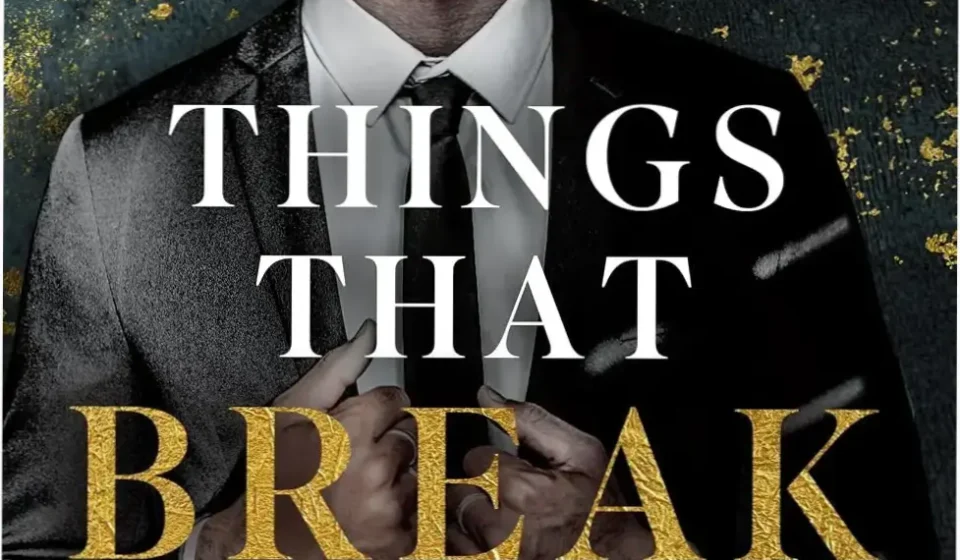
Michelle Heard’s “Things That Break Us” attempts to navigate this friction. It positions itself at the intersection of celebrity isolation and raw, domestic tragedy, questioning whether two broken people can actually build something stable or if they simply trigger each other’s traumas. For those tracking the current trend of “emotional angst” in contemporary fiction, you can check the reader reception and current availability here to see if the execution matches the premise.
Ready to dive into “Things That Break Us”?
Explore available editions, check current live pricing, or download a free sample directly on Amazon.
Preview Free Sample & Check Price on Amazon
*You will be redirected to Amazon. As an Amazon Associate, we may earn from qualifying purchases.
The Burden of Visibility: Easton’s Paradox
Easton Rowe is the quintessential “golden boy” archetype, but with a cynical twist. As a famous actor, his life is a performance. The narrative effectively explores the paradox of being known by millions while being understood by absolutely no one.
Heard doesn’t spend too much time on the glamour of Hollywood. Instead, she focuses on the loneliness. Easton’s skepticism toward women is a defense mechanism—a logical response to a world where his bank account is more attractive than his personality.
This creates a strong emotional anchor. The reader isn’t rooting for the celebrity; they are rooting for the man who is exhausted by the mask. It’s a direct hit on the “lonely at the top” trope that resonates because it feels grounded in a specific kind of social anxiety.
The Architecture of Grief: Nova’s Silent Struggle
Nova represents the “quiet” side of trauma. While Easton deals with the noise of fame, Nova deals with the silence of things left unsaid. Her character is defined by flinches and ghosts—subtle cues that something happened in her past that she isn’t ready to voice.
The chemistry between Easton and Nova isn’t built on witty banter or immediate sparks. It’s built on shared mourning. They are bonded by the tragedy of Easton’s dying sister, which provides a heavy, somber backdrop that prevents the romance from feeling too superficial.
From a technical standpoint, the pacing of Nova’s revelation is slow. Some readers on Goodreads have noted that the “mystery” of her past can feel stretched, but for others, this slow burn mimics the actual process of gaining trust after trauma.
“I know we can take our broken pieces and make something whole.”
This line summarizes the book’s core thesis. It’s not about “fixing” someone—which is a dangerous romantic cliché—but about assembling a new version of a life from the wreckage. It’s a subtle but important distinction in the “hurt/comfort” genre.
Technical Analysis: Pacing and Narrative Structure
At 282 pages, the book is lean. It doesn’t waste time with unnecessary subplots. The focus remains tight on the triangle of Easton, Nova, and the dying sister.
The prose is conversational and direct. Heard avoids overly flowery language, opting instead for emotional honesty. This makes the “heavy” scenes hit harder because they aren’t buffered by poetic distractions.
However, the “Sister’s Best Friend” trope can be a double-edged sword. While it provides built-in history and tension, it can also feel restrictive. The narrative survives this by leaning into the grief rather than just the “forbidden” nature of the relationship.