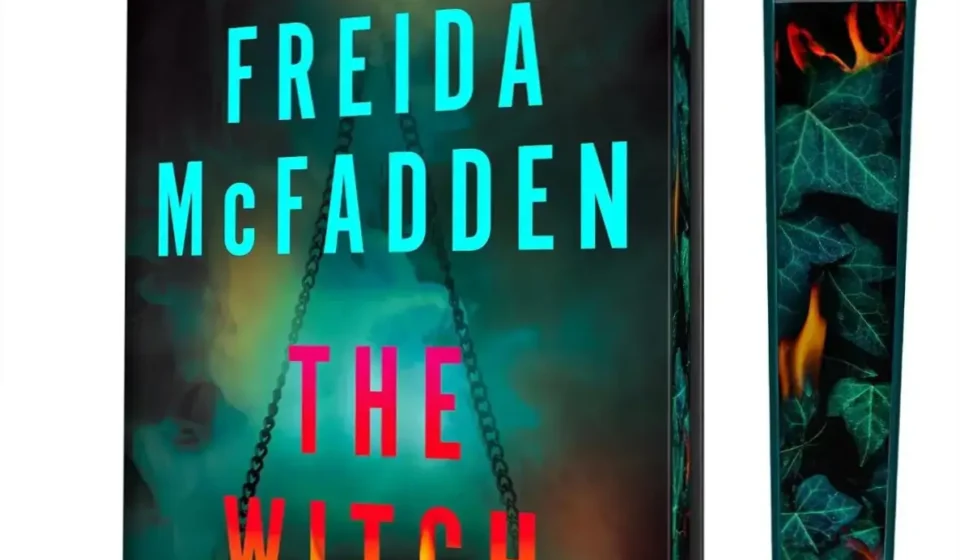

Most of us have fantasized about hitting a reset button when life falls apart. When the job vanishes and the rent is overdue, the idea of retreating to a family estate sounds like a sanctuary. We tell ourselves that isolation is the cure for burnout, ignoring the fact that solitude often amplifies the things we are trying to outrun.
This is the psychological hook Freida McFadden uses in “The Witch (Deluxe Edition).” It isn’t just another haunted house story; it’s a study of inherited trauma disguised as a page-turner. For those tracking the author’s trajectory from “The Housemaid,” the expectation is high for a narrative that weaponizes domestic tension and delivers a jaw-dropping pivot. You can check the current availability and reader reception to see if the hype aligns with your taste in thrillers.
Ready to dive into “The Witch (Deluxe Edition)”?
Explore available editions, check current live pricing, or download a free sample directly on Amazon.
Preview Free Sample & Check Price on Amazon
*You will be redirected to Amazon. As an Amazon Associate, we may earn from qualifying purchases.
The McFadden Engine: Pacing and Narrative Velocity
Freida McFadden doesn’t write novels; she writes addiction. Her style is stripped of literary fluff, focusing instead on a relentless forward momentum. The chapters are short, the cliffhangers are aggressive, and the prose is designed for maximum consumption speed.
In “The Witch,” this velocity is critical. Because the plot relies on a slow build of atmospheric dread—the clock stopping at 3:41 a.m., the flickering lights—the fast pacing prevents the story from becoming a stagnant gothic piece. It keeps the reader in a state of perpetual anxiety.
Skeptics often argue that this “popcorn” style of writing lacks depth. However, in the context of a psychological thriller, efficiency is a feature, not a bug. McFadden knows exactly when to give the reader a crumb of information and when to pull the rug out from under them.
| Technical Aspect | Performance | Verdict |
|---|---|---|
| Reading Speed | Extremely High | Binge-worthy |
| Atmospheric Depth | Moderate to High | Effective Dread |
| Plot Complexity | Medium | Twist-driven |
| Character Depth | Functional | Plot-centric |
The Architecture of Dread: Pemberton as a Character
The setting of Pemberton, a seventeenth-century estate in rural Massachusetts, is more than a backdrop. It functions as a silent antagonist. The house is a physical manifestation of the family’s buried secrets, where the walls literally and figuratively hold the screams of the past.
The use of specific, recurring triggers—like the grandfather clock—creates a rhythmic tension. It transforms the reading experience into a countdown. Every time the clock nears 3:41 a.m., the reader’s heart rate spikes, regardless of whether the payoff is a supernatural jump-scare or a psychological revelation.
The juxtaposition of the “Deluxe Edition” hardcover format with the gritty, decaying nature of the plot creates an interesting contrast. You are holding a polished, premium object while reading about the raw, ugly history of women burned for their perceived deviations from social norms.
Historical Echoes and Generational Trauma
The core of the story lies in the link between Julia’s current instability and the 1
Who Should Actually Read This?
The Witch is designed for a specific type of reader: the “binge-watcher” of literature. If you enjoy psychological thrillers where the plot moves at a breakneck pace and twists are delivered like rapid-fire punches, this is your territory.
It appeals most to fans of the “domestic noir” subgenre—those who love the claustrophobia of a sprawling estate and the tension of family secrets that refuse to stay buried. If you enjoyed The Housemaid, you already know the rhythm Freida McFadden employs.
Who should skip this book:
- Literary Purists: If you are looking for a dense, academically accurate exploration of the 1692 Salem witch trials, look elsewhere. This is a thriller, not a history textbook.
- Slow-Burn Enthusiasts: Those who prefer a gradual build-up with subtle atmospheric dread may find the pacing too aggressive or the twists too convenient.
- The “Anti-Twist” Crowd: If you find high-concept plot pivots frustrating or contrived, McFadden’s style will likely irritate you.
Value for Money: Deluxe Edition Analysis
Choosing the Deluxe Edition is a decision based on aesthetics rather than content. You aren’t paying for extra chapters or hidden lore; you are paying for the physical presence of the book on your shelf.
For a collector, the hardcover format justifies the price. For the casual reader, the digital or paperback version offers the exact same dopamine hit. The real “value” here is the efficiency of the storytelling—McFadden doesn’t waste pages on fluff, ensuring a high information-to-page ratio.
Common Purchasing Misstep: Expecting a slow, gothic character study. This is a high-tension puzzle. Buying it under the impression that it is a quiet historical drama is a recipe for disappointment.
Editorial Conclusion
The Witch succeeds because it understands its audience. It doesn’t pretend to be high art; it aims to be an addictive, unsettling experience. While some may find the tropes familiar, the execution is surgically precise.
It is a reliable choice for anyone needing a “palette cleanser” between heavier reads—something that grabs you by the throat and doesn’t let go until the final page. To see if the current pricing matches your budget or to read unfiltered customer experiences, check the live listings on Amazon.
Final Editorial Verdict
“The Witch (Deluxe Edition)” delivers on its core promise for its intended audience, offering compelling insights without fluff. As highlighted in our detailed edition breakdown, its practical depth and readability are its greatest strengths.
We also recommend checking the official Kindle sample and reader ratings before making your final purchase decision.
*You will be redirected to Amazon. As an Amazon Associate, we earn from qualifying purchases.