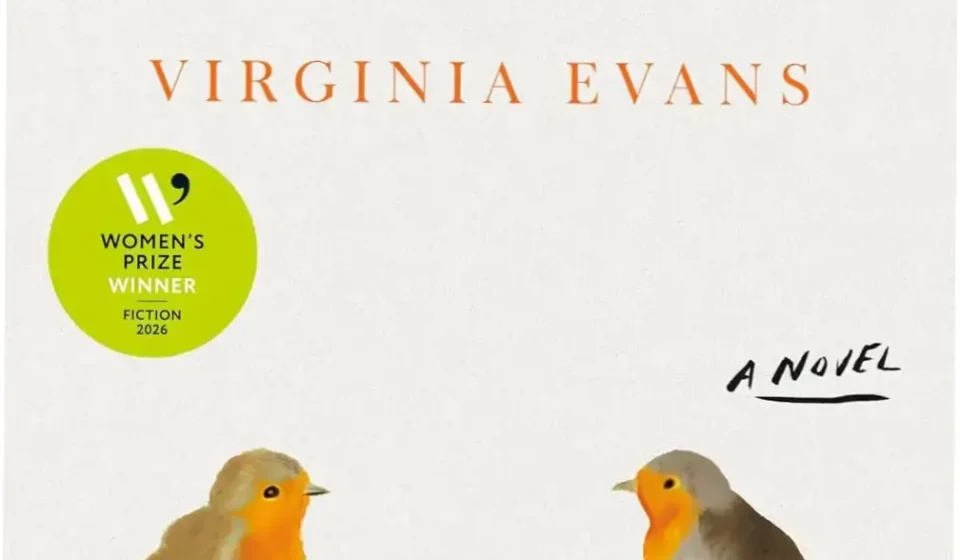

We live in an era of instant gratification, where a “thought” is reduced to a 280-character burst or a fleeting voice note. The tragedy of modern communication isn’t the speed, but the lack of residue; we leave behind digital ghosts rather than tangible legacies. This is the void that Virginia Evans taps into with her latest work.
For those seeking a narrative that rewards patience over pace, The Correspondent arrives not as a fast-paced thriller, but as a meditative study on the architecture of a life. It challenges the reader to stop skimming and start feeling, positioning the act of writing as a tool for survival rather than mere documentation.
Ready to dive into “The Correspondent”?
Explore available editions, check current live pricing, or download a free sample directly on Amazon.
Preview Free Sample & Check Price on Amazon
*You will be redirected to Amazon. As an Amazon Associate, we may earn from qualifying purchases.
The Art of the Slow Burn: Pacing and Prose
Let’s be clear: if you are looking for a plot-driven rollercoaster, you are in the wrong place. Virginia Evans doesn’t do “fast.” She does “deep.”
The narrative unfolds with a deliberate, almost rhythmic slowness. It mirrors the act of writing a letter by hand—the pause for thought, the crossing out of a word, the hesitation before a confession.
The prose is surgically precise. Evans avoids the fluff common in contemporary “literary” fiction, opting instead for a style that feels like a conversation with a very intelligent, slightly weary old friend.
Critics from the New York Times called it “quietly dazzling,” and that is the correct descriptor. The dazzle isn’t in the fireworks, but in the way the light hits the dust motes in a quiet room.
For the modern reader, this pacing is a risk. Many will find the first fifty pages “slow.” However, the payoff is cumulative. The tension doesn’t come from what happens, but from the slow unveiling of who Sybil Van Antwerp actually is.
Sybil Van Antwerp: A Masterclass in Characterization
Sybil is not your typical “wise grandmother” trope. She is a distinguished lawyer, a divorcee, and a woman of immense intellectual hubris.
What makes her compelling is her contradiction. She writes to everyone—the university president, famous authors like Joan Didion—yet she keeps the most important letter unsent.
This dynamic creates a fascinating psychological tension. We see Sybil as the world sees her: capable, sharp, and composed. But through her letters, we see the fractures.
The “hubris of youth” mentioned in the book’s premise is played out through Sybil’s memories. She isn’t just reflecting on her life; she is auditing it, like the law degree she spent years earning.
Many readers on Goodreads have noted that Sybil feels “dangerously real.” She is often stubborn and occasionally frustrating, which is precisely why she works. She isn’t a saint; she’s a human trying to negotiate with her own past.
The Epistolary Puzzle: Structure and Value
The book treats letters as puzzle pieces. Each correspondence is a fragment of a larger identity that Sybil has spent decades assembling.
The structural brilliance lies in the “unsent letter.” It serves as the narrative’s gravitational center. Everything orbits around the silence of that one specific piece of paper.
When letters from the past finally arrive, they act as catalysts. They don’t just provide information; they force a confrontation with pain that Sybil had successfully archived.
From a technical standpoint, the novel explores the “transformative power of the written word.” It argues that writing is not just recording a life, but a way of processing it in real-time.
The real-world value here is the reminder that some things cannot be solved with a quick text or a phone call. Some wounds require the slow, agonizing process of articulation to heal.
current reader ratings and available formats on Amazon to see if this narrative style aligns with your current reading mood.
Final Editorial Verdict“The Correspondent: A Novel” delivers on its core promise for its intended audience, offering compelling insights without fluff. As highlighted in our detailed edition breakdown, its practical depth and readability are its greatest strengths. We also recommend checking the official Kindle sample and reader ratings before making your final purchase decision. *You will be redirected to Amazon. As an Amazon Associate, we earn from qualifying purchases. 
|
|---|