
Most people view maps as objective tools—lines on paper that tell us where we are. But history proves that mapping is rarely neutral; it is often an act of possession. When a landscape is scarred by trauma, like Ireland after the Great Hunger, a map becomes a ledger of loss and a tool for colonization.
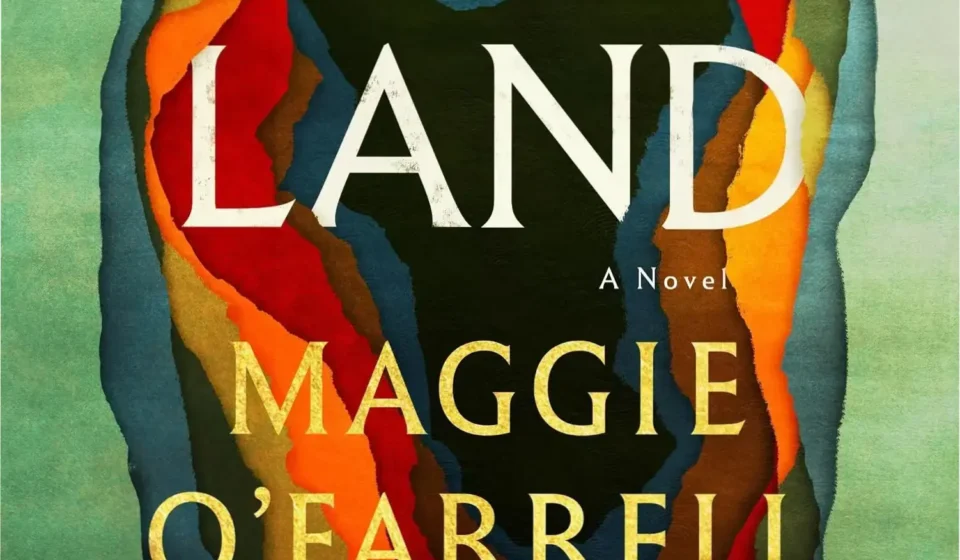
Readers coming to Maggie O’Farrell usually expect a certain level of lyrical intensity, given the success of Hamnet. However, the real challenge here isn’t just the prose, but the tension between the geological scale of nature and the fragile, breaking points of human psychology. You can check the current reader reception and availability of Land to see how this particular blend of historical grief and atmospheric suspense is landing with the public.
The expectation is often a straightforward historical drama. The reality is something more visceral: a study of how the land remembers what humans try to bury. It is less about the “what” of the plot and more about the “how” of survival in a place that feels alive and indifferent to human suffering.
Ready to dive into “Land”?
Explore available editions, check current live pricing, or download a free sample directly on Amazon.
Preview Free Sample & Check Price on Amazon
*You will be redirected to Amazon. As an Amazon Associate, we may earn from qualifying purchases.
The Architecture of Atmosphere: Style and Pacing
Maggie O’Farrell does not write “fast” books. If you are looking for a plot-driven thriller where the mystery is solved by page 100, you are in the wrong place. Her style is immersive, almost suffocating in its detail. She treats the Irish landscape not as a setting, but as a primary character.
The pacing is deliberate. It mirrors the slow, methodical process of the Ordnance Survey—the actual mapping of the land. You feel the wind, the dampness of the moss, and the oppressive silence of a country that has been emptied of its people.
Some critics on platforms like Goodreads often complain that the prose can feel “overwritten.” I disagree. The density is the point. To understand the weight of the Great Hunger, the writing must feel heavy. It must feel like the soil itself is pressing down on the characters.
“A breathtaking hymn to the sanctity of natural spaces… moved not only by the vivid lives of its human characters, but the thrumming, gorgeous presence of its mosses, waters, winds, and skies.” — Daniel Mason
The Psychological Core: Tomás and Liam
The heart of the story is the friction between Tomás and his ten-year-old son, Liam. This isn’t a warm, fuzzy father-son relationship. It is a bond forged in silence and reluctance.
Tomás is a man obsessed. His goal isn’t just to map the land for the British soldiers, but to create a record of disaster. He wants the maps to scream the truth about the famine. This obsession makes him taciturn and distant, leaving Liam to navigate his father’s moods like a minefield.
The turning point—the “unsettling encounter in a copse”—shifts the novel from a historical study to a psychological mystery. The cracks that open in Tomás are terrifying to Liam, and the reader is placed squarely in the boy’s shoes: confused, frightened, and suddenly responsible for the survival of both.
The dynamic is a masterclass in showing rather than telling. We don’t need a monologue about trauma; we see it in the way Tomás reacts to a specific patch of woodland or a sudden change in the wind.
Historical Weight vs. Narrative Fiction
Setting a story in 1865 Ireland requires a delicate balance. You cannot ignore the Great Hunger (the Potato Famine), but you cannot let the history lecture override the story. O’Farrell manages this by weaving the tragedy into the physical geography.
The “ghosts” mentioned in the synopsis aren’t necessarily supernatural; they are the ghosts of a decimated population. The land is full of ruins and empty villages. The act of mapping is an attempt to organize a chaos that is fundamentally unorganizable.
| Key Element | Narrative Function | Emotional Impact |
|---|---|---|
| The Ordnance Survey | Plot Driver / Framework | Feeling of surveillance and control |
The
Who Should Actually Read This?Land isn’t for the casual reader looking for a fast-paced historical romp. If you crave plot twists every ten pages or a linear, high-tension narrative, you will likely find this frustratingly slow. This is a book for the “atmosphere seekers.” It is designed for readers who appreciate prose that feels like a painting—dense, textured, and deeply immersive. If you enjoyed Hamnet or are drawn to narratives where the landscape is as much a character as the humans, this is your territory. Skip this book if:
Value Analysis: Literary Art vs. EntertainmentFrom a “value for money” perspective, you aren’t paying for a simple story; you’re paying for a sensory experience. O’Farrell doesn’t just tell you about the Great Hunger’s aftermath—she makes you feel the dampness of the Atlantic wind and the weight of the silence in the Irish countryside. The risk here is the “literary trap.” Some readers buy these bestsellers expecting a cinematic experience, only to find a meditative study on grief and colonization. It is a high-value read for those who treat books as art, but a low-value investment for those seeking a quick “beach read.” Common Misconceptions (Quick FAQ)Is this a textbook on the Ordnance Survey? Is it a tragedy? Is the audiobook worth it? Editorial VerdictMaggie O’Farrell has crafted a haunting piece of historical fiction that refuses to rush. It is a story about the things we try to map and the things that remain stubbornly invisible. While the pacing may alienate some, the emotional payoff is profound for those willing to endure the journey. If you are ready to dive into the atmospheric depths of 19th-century Ireland, we suggest checking the latest reader ratings and available formats to see which version suits your reading style best. Final Editorial Verdict“Land” delivers on its core promise for its intended audience, offering compelling insights without fluff. As highlighted in our detailed edition breakdown, its practical depth and readability are its greatest strengths. We also recommend checking the official Kindle sample and reader ratings before making your final purchase decision. *You will be redirected to Amazon. As an Amazon Associate, we earn from qualifying purchases. 
|