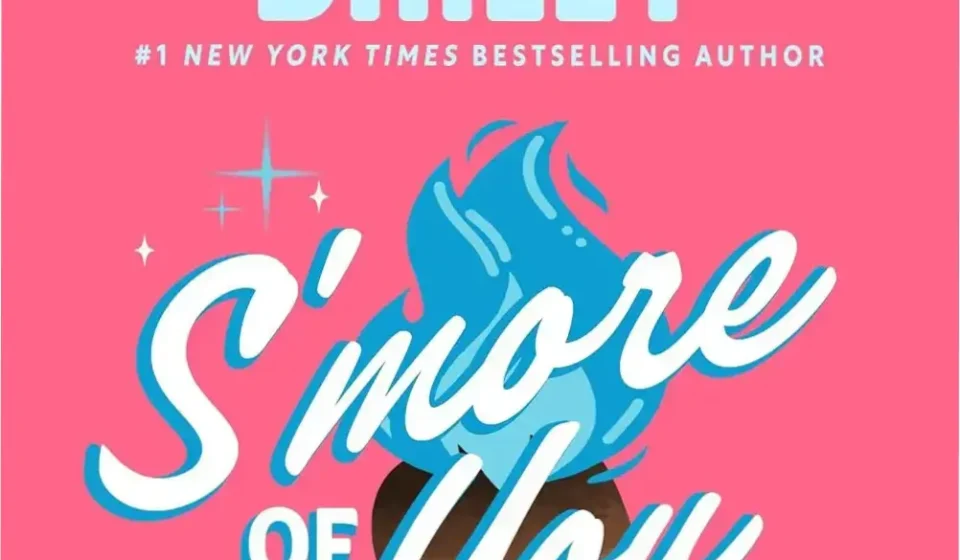

Most of us have spent at least one chapter of our lives pretending that a crushing attraction is actually a burning hatred. It is a classic human defense mechanism: if you can’t have the person, you might as well make them your favorite target for annoyance. This psychological tug-of-war is the engine that drives “S’more of You,” a tight, high-tension short story that explores the thin line between a prank and a plea for attention.
In a market saturated with 400-page doorstoppers, readers are increasingly hunting for “snackable” content—stories that deliver the emotional payoff and the steam without requiring a week-long commitment. Tessa Bailey, a titan of the contemporary romance genre, understands this shift perfectly. This story isn’t trying to be a sprawling epic; it’s a targeted strike on the “rivals-to-lovers” trope, designed for the reader who only has a flight or a lunch break to escape reality. You can check the current reader reception and availability here to see if this specific brand of tension fits your mood.
The challenge for any author writing a short piece is the “emotional shorthand.” There is no time for slow-burn world-building. You have to establish years of history, a believable rivalry, and an irresistible chemistry in under 80 pages. Bailey attempts to bridge this gap by leaning into the camp counselor setting, where the forced proximity of a summer session acts as a pressure cooker for Margot and Dean’s unresolved friction.
Ready to dive into “S’more of You”?
Explore available editions, check current live pricing, or download a free sample directly on Amazon.
Preview Free Sample & Check Price on Amazon
*You will be redirected to Amazon. As an Amazon Associate, we may earn from qualifying purchases.
The “Fast-Food” Narrative: Pacing and Structure
Let’s be skeptical for a moment: can a 77-page story actually deliver a satisfying character arc? In “S’more of You,” the pacing is breathless. Bailey doesn’t waste time on fluff. She throws us directly into the friction between Margot Berry, the chaos-agent, and Dean Ingram, the human embodiment of a rulebook.
The narrative structure is linear and focused. It operates on a ticking clock—the end of the camp session. This creates a natural urgency that prevents the short length from feeling like a lack of substance. Instead, it feels like a concentrated dose of romance.
However, this speed comes with a cost. Some readers on platforms like Goodreads have noted that the transition from “hating each other” to “loving each other” happens with dizzying speed. If you are looking for a slow-burn that simmers for 300 pages, this will feel like a sprint. But if you want the climax without the preamble, the structure works.
“The beauty of the short form is that it captures a snapshot of a feeling. Bailey isn’t writing a biography; she’s writing a mood.”
The Anatomy of the Rivalry: Tropes vs. Reality
The “rivals-to-lovers” trope is the bread and butter of modern romance, but it often falls into the trap of being repetitive. Bailey avoids this by giving the rivalry a history. Margot hasn’t just been mean; she’s been pranking Dean for eight years.
This detail is crucial. It transforms the rivalry from a simple disagreement into a long-term communication failure. Margot uses pranks as a proxy for intimacy because she lacks the tools to be vulnerable. Dean, the rule-follower, views the world through a lens of order, making him the perfect foil for Margot’s entropy.
The conflict peaks when Margot finally confesses her feelings, only for Dean to dismiss it as another elaborate prank. This is the emotional core of the book: the fear that your true self will be mistaken for a joke. It’s a relatable human anxiety that elevates the story above a simple “steamy” read.
| Element | Execution | Verdict |
|---|---|---|
| Chemistry | High-voltage, immediate | Excellent |
| Plot Depth | Surface-level, trope-driven | Average |
| Pacing | Rapid-fire, no filler | Efficient |
| Character Growth | Condensed but present | Satisfactory |
The “Tessa Bailey” Factor: Steam and Style
You don’t read Tessa Bailey for the prose; you read her for the heat. Her writing style is direct
Who This Story Is Actually For
S’more of You isn’t a novel; it’s a literary snack. It is designed for the reader who has exactly two hours to kill and wants a high-dosage injection of the “rivals-to-lovers” trope without the 400-page emotional slog.
The ideal reader is someone who enjoys the “grumpy vs. sunshine” dynamic and prefers their romance fast-paced and high-heat. If you appreciate Tessa Bailey’s signature brand of assertive dialogue and steamy tension, this fits your profile.
Who Should Probably Skip It
- Plot Purists: If you require intricate world-building or a complex plot to stay engaged, 77 pages won’t satisfy you.
- Slow-Burn Enthusiasts: This is a sprint. The tension resolves quickly. If you prefer a romance that takes three books to reach a first kiss, move on.
- Anti-Trope Readers: If the “he thinks her confession is a prank” cliché feels tired to you, this narrative will feel predictable.
The Value Proposition: Is It Worth the Click?
From a technical standpoint, you are paying for efficiency. The value here lies in the “one-sitting” experience. There is no filler, no unnecessary subplots, and no fluff.
A common purchasing mistake is treating this as a standalone novel. It is part of the Summer Lovin’ collection. Expecting a deep character arc is a mistake; instead, expect a focused character snapshot that delivers a specific emotional and physical payoff.
Editorial Verdict
Tessa Bailey knows exactly how to manipulate romantic tension in a short space. While the “camp counselor” setting is a bit generic, the chemistry between Margot and Dean carries the weight. It’s a low-risk, high-reward read for romance fans.
Ultimately, it serves as an excellent entry point into the author’s style. To see if the chemistry translates to your taste, you can check the current reader ratings and live pricing on Amazon.
Final Editorial Verdict
“S’more of You” delivers on its core promise for its intended audience, offering compelling insights without fluff. As highlighted in our detailed edition breakdown, its practical depth and readability are its greatest strengths.
We also recommend checking the official Kindle sample and reader ratings before making your final purchase decision.
*You will be redirected to Amazon. As an Amazon Associate, we earn from qualifying purchases.