
Most people believe that the most dangerous lies are the ones told to strangers. In reality, the most suffocating deceptions happen behind the closed doors of a “perfect” marriage, where the facade of stability masks a psychological war zone. We often overlook how a simple hobby—a piece of jewelry, a garden, a hidden book—becomes a lifeline for someone trapped in an abusive cycle.
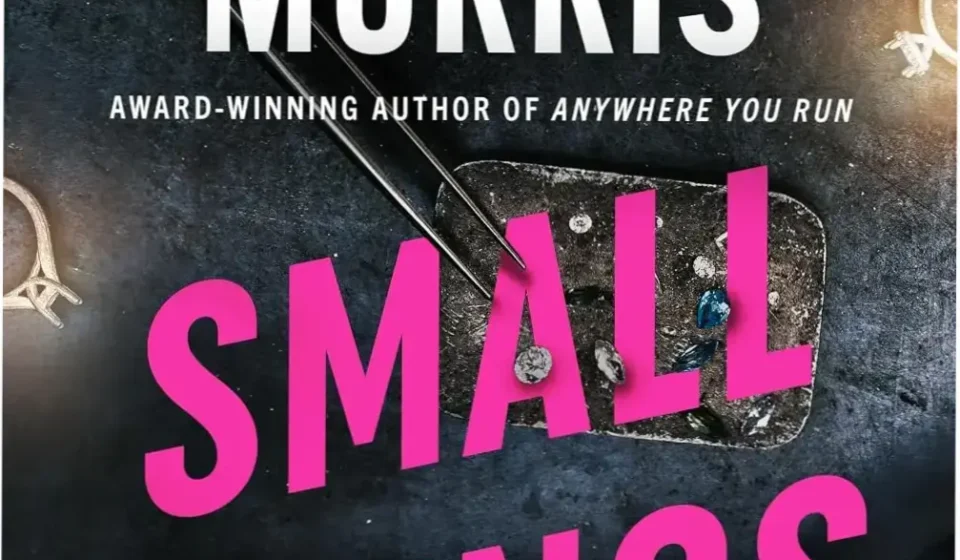
Wanda M. Morris explores this fragile boundary between survival and liberation in Small Things. For readers looking for a quick but visceral dive into domestic noir, checking the current reader reception on Amazon reveals a story that doesn’t waste a single word on filler, focusing instead on the cold mechanics of an escape plan.
Ready to dive into “Small Things (Alibis collection)”?
Explore available editions, check current live pricing, or download a free sample directly on Amazon.
Preview Free Sample & Check Price on Amazon
*You will be redirected to Amazon. As an Amazon Associate, we may earn from qualifying purchases.
The “Sprint” Pacing: Efficiency Over Exposition
At only 36 pages, Small Things isn’t a novel; it’s a tactical strike. Morris avoids the traditional slow-burn setup of domestic thrillers, opting instead for a claustrophobic atmosphere that mirrors Hannah’s own entrapment.
The prose is stripped down. There is no wasted adjectives or meandering subplots. Every sentence serves one of two purposes: establishing the husband’s volatility or detailing Hannah’s meticulous plan.
For the modern reader with a shrinking attention span, this format is a win. You can consume the entire narrative in one sitting, which enhances the feeling of urgency. The story doesn’t let you breathe, which is exactly how Hannah feels in her own home.
However, the brevity is a double-edged sword. Some readers on Goodreads noted that the transition from “victim” to “architect of a plan” happens rapidly, leaving little room for deeper character development.
The Sanctuary of the “Small Thing”
The central metaphor of the story is the jewelry shed. In the context of domestic abuse, “small things” aren’t just trinkets; they are anchors to a version of the self that the abuser hasn’t managed to kill yet.
Hannah’s jewelry making represents more than a hobby. It is her only autonomous space. The act of crafting something beautiful and precise contrasts sharply with the chaos and unpredictability of her husband’s emotional outbursts.
Morris handles this with a cynical precision. She doesn’t romanticize the art; she frames it as a survival tool. The jewelry is the “alibi” for her time and her mental energy.
“A blessed freedom is in the jewelry she crafts in the shed behind her house.”
This quote highlights the tragic reality of the narrative: when your world is shrunk to the size of a backyard shed, that shed becomes your entire universe.
The Alibis Framework: Deception as a Weapon
As part of the Alibis collection, this story focuses heavily on the concept of the “trace-less” exit. The narrative tension doesn’t come from whether Hannah will leave, but whether she can do it without leaving a digital or physical footprint.
The story explores the irony of the “perfect life.” The same traits that make Hannah appear to be a compliant, quiet wife are the traits that make her a dangerous adversary. She has learned to be invisible, and invisibility is the ultimate tool for a crime or an escape.
The psychological tension is built on the threat of loss. When the husband threatens to take away the “small things,” he inadvertently triggers the final phase of her plan. It is a classic catalyst: the abuser removes the last remaining tether, leaving the victim with nothing left to lose.