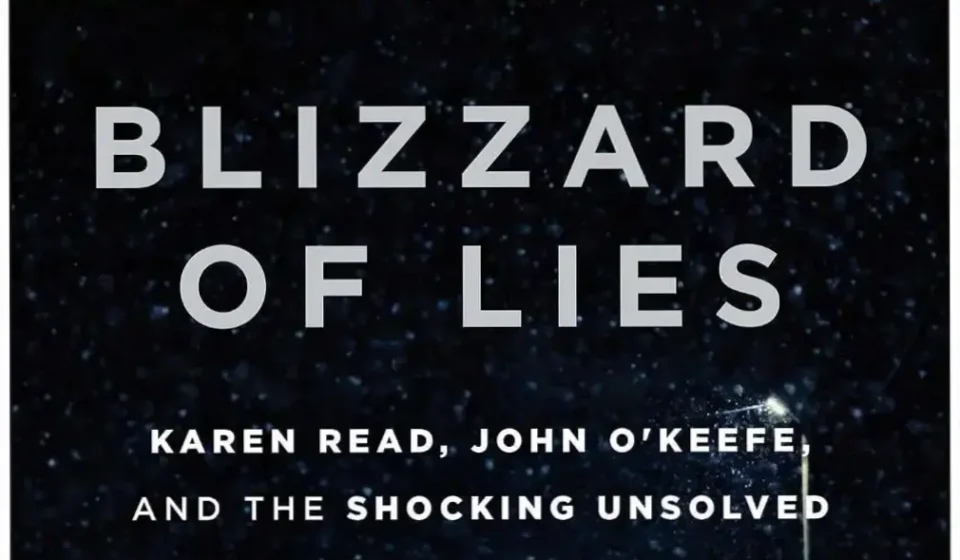

True crime often follows a predictable script: a crime is committed, a suspect is identified, and the legal system delivers a verdict that provides closure. But when the system itself is the primary suspect, the script flips into something far more disturbing. The case of John O’Keefe and Karen Read isn’t just about a death in the snow; it’s a case study in how institutional loyalty can override the pursuit of truth.
For those tracking the “Cop Town” scandal, the expectation is usually a clear-cut narrative of guilt or innocence. However, Dave Wedge delivers something more complex—a dissection of systemic failure. If you want to see how the evidence actually stacked up against the prosecution’s narrative, you can check the current reception and availability of Blizzard of Lies to see if this account aligns with your view of the case.
Ready to dive into “Blizzard of Lies”?
Explore available editions, check current live pricing, or download a free sample directly on Amazon.
Preview Free Sample & Check Price on Amazon
*You will be redirected to Amazon. As an Amazon Associate, we may earn from qualifying purchases.
The Reporter’s Lens: Pacing and Precision
Dave Wedge doesn’t write like a novelist trying to manufacture suspense. He writes like a veteran reporter who is tired of the noise. The pacing is propulsive, not because of artificial cliffhangers, but because the facts themselves are absurd.
The prose is lean. He avoids the flowery adjectives common in “beach read” true crime. Instead, he relies on a sequence of revelations that make the reader question the competence of the entire Massachusetts law enforcement scene.
Reading this feels like auditing a trial in real-time. Wedge focuses on the gaps—the evidence excluded from the courtroom and the testimonies that didn’t quite add up. It’s a clinical approach to a highly emotional tragedy.
“The apparently open-and-shut manslaughter case quickly devolved into a chaotic mixture of lies, institutional corruption, and police cover-ups.”
Narrative Structure: From Hit-and-Run to Systemic Failure
The book is structured as a descent. It starts with the image of Officer John O’Keefe dead in the snow—a scene that looked like a simple hit-and-run. From there, the narrative expands outward, moving from the victim to the suspect, and finally to the institution.
Wedge masterfully handles the transition from a “whodunit” to a “how-did-they-do-this.” The focus shifts from Karen Read’s possible guilt to the police department’s possible conspiracy.
This structure mirrors the actual experience of following the case in the news. You start wanting to know who killed O’Keefe, but you end up wanting to know who is lying about it.
| Narrative Phase | Focus | Key Emotional Driver |
|---|---|---|
| The Incident | O’Keefe’s death & immediate scene | Shock and Confusion |
| The Accusation | Karen Read’s arrest and trial | Indignation and Doubt |
| The Exposure | Police misconduct and cover-ups | Skepticism and Outrage |
| The Aftermath | 2025 acquittal and unresolved mystery | Frustration and Lack of Closure |
The “Cop Town” Dynamic and the Blue Wall
The core of the book is the analysis of “Cop Town.” Wedge explores the suffocating nature of a community where law enforcement is the primary social and political currency.
He doesn’t just claim there was corruption; he shows the mechanics of it. The “blue wall of silence” isn’t presented as a conspiracy theory, but as a cultural byproduct of institutional loyalty.
The most chilling parts of the book are the revelations about other murder cases now in jeopardy. It suggests that the misconduct uncovered during Read’s trial wasn’t an isolated incident, but a pattern of behavior.
Wedge’s access is a major asset here. By interviewing people on both sides—including the O’Keefe family and Read’s legal team—he avoids the trap of becoming a mouthpiece for one side.
Expectation vs. Reality: The Void
Who Should Actually Read This?
This isn’t a book for the casual reader looking for a cozy mystery. Blizzard of Lies is built for the true crime obsessive who enjoys the “deep dive” into institutional failure.
It appeals most to those who are skeptical of official narratives and fascinated by the friction between small-town police culture and the legal system. If you followed the Karen Read trial via social media fragments, Wedge provides the necessary connective tissue to make sense of the chaos.
Who Should Skip It
Avoid this book if you require a definitive, “closed-case” resolution. Because the trial ended in acquittal and the death remains an unresolved mystery, you won’t find a neat bow tied at the end.
Similarly, if you dislike dense accounts of legal motions, excluded evidence, and the bureaucratic minutiae of Massachusetts law enforcement, this will feel like a slog.
Common Purchasing Missteps
The biggest mistake readers make is expecting a fast-paced legal thriller. This is investigative journalism.
It is methodical and immersive. It doesn’t rely on plot twists for shock value but on the slow reveal of systemic corruption. Don’t buy this expecting a “manual” on how to solve the crime; buy it to understand why the crime remains unsolved.
Quick Analysis FAQ
- Is it biased? Wedge is a veteran reporter. While he exposes police misconduct, he balances the narrative by interviewing both the Read legal team and the O’Keefe family.
- Is it a courtroom transcript? No. It’s a narrative reconstruction using interviews and evidence that often didn’t even make it into the trial.
- Does it offer new evidence? It provides context and “inside stories” that clarify the atmospheric tension of “Cop Town,” rather than introducing a new smoking gun.
Editorial Verdict: Is It Worth It?
From a value-for-money perspective, the book delivers. It condenses a sprawling, multi-year legal circus into a readable volume without stripping away the technical nuances that made the case famous.
It succeeds because it doesn’t try to be the judge; it acts as the archivist of a tragedy. For the price of a hardcover, you get a masterclass in how institutional loyalty can obstruct justice.
To see how other readers are reacting to the revelations about the Massachusetts police scene, you can check the latest verified reviews and current pricing here.
Final Editorial Verdict
“Blizzard of Lies” delivers on its core promise for its intended audience, offering compelling insights without fluff. As highlighted in our detailed edition breakdown, its practical depth and readability are its greatest strengths.
We also recommend checking the official Kindle sample and reader ratings before making your final purchase decision.
*You will be redirected to Amazon. As an Amazon Associate, we earn from qualifying purchases.