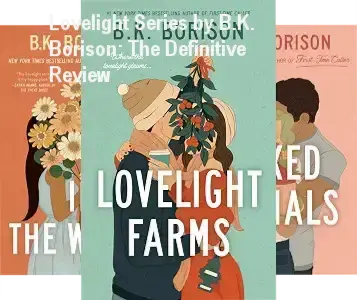

The holiday season usually comes with a crushing weight of expectations. There is this unspoken social contract that demands we have a “perfect” life, a picturesque home, and, most annoyingly, a romantic partner to share the festivities with. For many, this creates a performance—a curated version of reality designed to satisfy the gaze of others, especially in the age of social media where a single filtered photo can define a person’s success.
This is the precise tension B.K. Borison taps into with Lovelight. It isn’t just a story about a Christmas tree farm; it is a study on the gap between the “Instagrammable” dream and the messy, raccoon-infested reality of running a small business. If you are looking for a genuine escape or want to see how the “fake dating” trope holds up under modern scrutiny, you can check the current reader reception and availability of the series here.
Ready to dive into “Lovelight”?
Explore available editions, check current live pricing, or download a free sample directly on Amazon.
Preview Free Sample & Check Price on Amazon
*You will be redirected to Amazon. As an Amazon Associate, we may earn from qualifying purchases.
The “Fake Dating” Trope: Cliché or Calculated?
Let’s be skeptical for a moment. Fake dating is perhaps the most exhausted trope in the contemporary romance genre. We have seen it a thousand times: two people pretend to be together for a specific goal, only to realize the feelings are real. On paper, Lovelight should feel like a carbon copy.
However, Borison avoids the “generic” trap by anchoring the lie in genuine desperation. Stella Bloom isn’t lying for vanity; she is lying to save her childhood sanctuary, Lovelight Farms. The stakes are financial and emotional, not just social.
The brilliance here is the chemistry between Stella and Luka. Because they are already best friends, the “fake” part of the relationship acts as a catalyst rather than a plot device. It forces them to acknowledge a tension that was already there, making the transition from platonic to romantic feel earned rather than forced.
Readers on platforms like Goodreads frequently mention that the “slow burn” is what saves this book from being just another seasonal read. The tension isn’t rushed; it simmers through shared cocoa and the stress of farm management.
Atmosphere vs. Reality: The Cozy Factor
Many “cozy” romances create a sterilized version of rural life. They give you the sweaters and the snow but forget the mud and the failure. Lovelight takes a different approach. It starts with a “pasture of dead trees” and a “hostile takeover by raccoons.”
This grit provides a necessary contrast to the romanticized image Stella tries to project for the Instagram influencer, Evelyn St. James. The book effectively mocks the “aesthetic” culture while simultaneously embracing the warmth of a small-town setting.
The setting becomes a character in itself. The farm is a symbol of resilience. When the environment is chaotic, the relationship between Stella and Luka becomes the only stable ground. This creates a psychological “safe haven” for the reader, which is exactly why the “cozy” genre is currently exploding in the market.
| Element | Expectation (The Trope) | official Amazon listing.
Final Editorial Verdict“Lovelight” delivers on its core promise for its intended audience, offering compelling insights without fluff. As highlighted in our detailed edition breakdown, its practical depth and readability are its greatest strengths. We also recommend checking the official Kindle sample and reader ratings before making your final purchase decision. *You will be redirected to Amazon. As an Amazon Associate, we earn from qualifying purchases. 
|
|---|