
Most people approach erotica looking for a destination—a specific climax or a functional sequence of events. But the real challenge in erotic literature isn’t describing the act; it’s capturing the psychological tension and the suffocating weight of desire that precedes it.
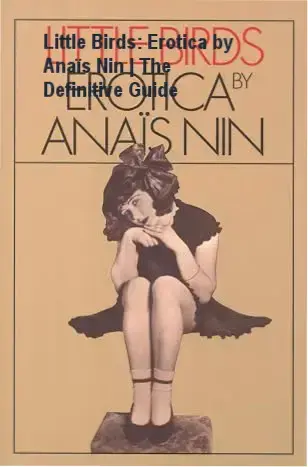
Anaïs Nin understood this better than almost any writer of her era. In Little Birds: Erotica, she doesn’t just provide vignettes of pleasure; she dissects the taboo and the female gaze in a way that still feels subversive today. If you are tired of the formulaic nature of modern romance, you can examine the reader reception and current editions to see how Nin’s approach differs from the mainstream.
For the skeptical reader, the risk here is the “purple prose.” Nin is known for a lush, almost decadent style that can feel overwhelming. However, for those seeking a literary exploration of sensuality rather than a manual for stimulation, this collection serves as a masterclass in atmospheric tension.
Ready to dive into “Little Birds: Erotica”?
Explore available editions, check current live pricing, or download a free sample directly on Amazon.
Preview Free Sample & Check Price on Amazon
*You will be redirected to Amazon. As an Amazon Associate, we may earn from qualifying purchases.
The Prose: Sensory Overload or Literary Art?
Nin does not write in straight lines. Her prose is a series of curves, swirls, and deep dives into the subconscious. To some, this is “over-writing.” To others, it is the only way to accurately describe the irrationality of lust.
The pacing is intentionally slow. She lingers on the scent of a room, the texture of fabric, and the internal monologue of her characters. It is not a book you “breeze through.” It is a book you inhabit.
If you are looking for a plot-driven narrative, you will be disappointed. These are vignettes. They are snapshots of intensity. The “action” is often secondary to the emotional state of the protagonist.
Anatomy of Desire: Core Themes
The central pillar of Little Birds is the reclamation of female sensuality. Nin writes from a perspective where women are the hunters, the explorers, and the architects of their own pleasure.
She explores the “taboo” not for the sake of shock value, but to understand where the boundaries of social acceptability meet the boundaries of human instinct. The stories move from the beaches of Normandy to the grit of New Orleans, proving that desire is universal but expressed through local textures.
“It is so distinct an advance in the depiction of female sensuality that I felt, on reading it, enormous gratitude.” — Alice Walker
This quote highlights the book’s real-world value. It isn’t just about sex; it’s about the permission to feel and describe those feelings without the filter of shame or the requirements of a “moral” ending.
Technical Breakdown: The Reader’s Experience
Reading Little Birds is a fragmented experience. Because it consists of 13 short stories, the emotional tone shifts rapidly. One moment you are in a state of romantic yearning; the next, you are witnessing a cold, clinical exploration of power.
The learning curve here is linguistic. If you aren’t used to mid-century literary styles, the vocabulary can feel dense. However, this density is what creates the “atmosphere” that makes the book a classic of the genre.
| Metric | Evaluation | Analysis |
|---|---|---|
| Narrative Flow | Fragmented | Short vignettes prevent a cohesive plot but maximize intensity. |
| Emotional Depth | High | Focuses on the psychological “why” rather than the physical “how.” |
| Accessibility | Moderate | Requires a patient reader who enjoys descriptive, poetic prose. |
| Genre Impact | Pioneering | Shifted the erotic lens toward female autonomy and desire. |
Expectation vs. Reality: The “Skeptic’s” View
Many readers go into Little Birds expecting something akin to modern “spicy” novels. The reality is far more cerebral. You won’t find the tropes of contemporary romance here—no “enemies to lovers” or contrived misunderstandings.
Instead, you find a study of the human condition. Some readers on Goodreads complain that the stories feel “unfinished.” This is a misunderstanding of the form. These are not stories with beginnings, middles
Who This Book Is Actually For
Little Birds is not a “beach read” or a generic romance novel. It is a study of the psychology of longing. You should read this if you value the female gaze and prefer atmospheric tension over rapid-fire plot progression.
It appeals most to:
- Literary enthusiasts: Those who appreciate prose that feels more like poetry or a painting than a standard narrative.
- Psychology buffs: Readers interested in the intersection of taboo, power dynamics, and subconscious desire.
- Fans of the vignette style: People who prefer short, punchy bursts of insight over a 500-page cohesive arc.
Who Should Skip This
Let’s be skeptical: this isn’t for everyone. If you are looking for explicit “smut” or a high-octane erotic thriller, you will likely find Nin’s style too abstract or slow.
Skip this book if:
- You require a linear, character-driven plot with a clear resolution.
- You dislike “flowery” or overly descriptive language.
- You are seeking a practical guide or a contemporary take on sexuality; Nin’s work is deeply rooted in a specific, mid-century avant-garde sensibility.
The “Value” Equation
At 164 pages, you aren’t paying for volume; you’re paying for density. Each of the 13 stories acts as a concentrated dose of sensuality.
The common purchasing mistake here is expecting a novel. This is a collection of vignettes. Some will resonate deeply, others will feel like fleeting sketches. The value lies in the artistry of the prose, not the length of the reading experience.
Quick Verdict FAQ
Is it too explicit? It is erotic, but it focuses on the feeling and the taboo rather than clinical descriptions.
Does it feel dated? The settings (Normandy, New Orleans) give it a timeless, almost dreamlike quality, though the social norms reflect the era of its conception.
Is it better than “Delta of Venus”? It’s a companion piece. While Delta is more expansive, Little Birds is often more refined and focused.
Editorial Conclusion
Anaïs Nin remains a titan of erotic literature because she understood that desire is more about the mind than the body. Little Birds is a sophisticated, sometimes challenging, exploration of what it means to want something forbidden.
It is a lean, potent collection that rewards the patient reader. If you want to see how the “female gaze” redefined the genre, it’s worth the investment. You can explore current pricing and read unfiltered user experiences via the official Amazon listing.
Final Editorial Verdict
“Little Birds: Erotica” delivers on its core promise for its intended audience, offering compelling insights without fluff. As highlighted in our detailed edition breakdown, its practical depth and readability are its greatest strengths.
We also recommend checking the official Kindle sample and reader ratings before making your final purchase decision.
*You will be redirected to Amazon. As an Amazon Associate, we earn from qualifying purchases.