
Most people spend their lives trying to fit in, but there is a recurring, primal human urge to do the opposite: to vanish. We see it in the modern obsession with “off-grid” living or the fantasy of leaving a corporate job to start over in a place where nobody knows our name.
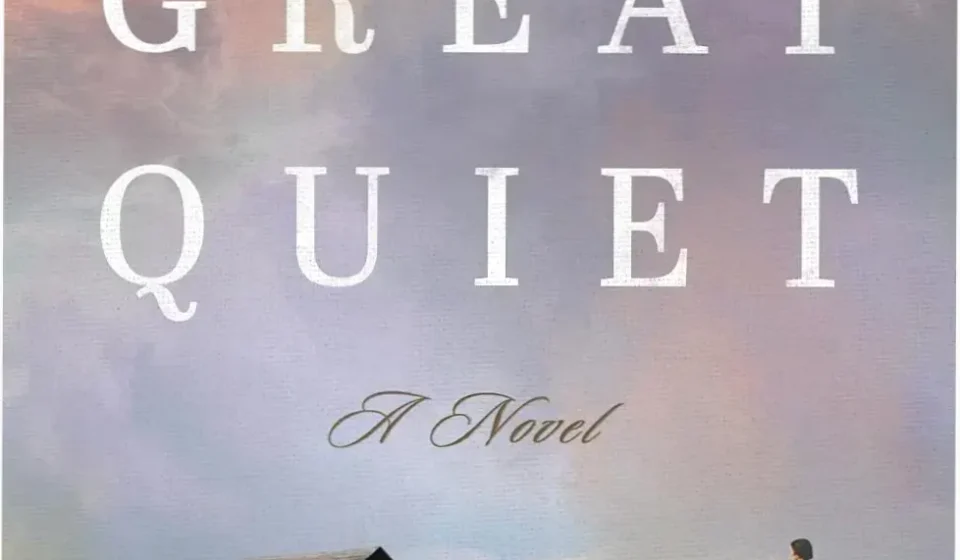
In the Great Quiet taps directly into this vein of escapism. It isn’t just a historical romance; it is a study on the cost of solitude and the baggage we carry when we try to outrun our own history. You can see how readers are reacting to this tension by checking the current reader reception and availability on Amazon.
- The core conflict: The battle between the need for peace and the impossibility of total isolation.
- The setting: The brutal, lawless landscape of the 1893 Oklahoma land rush.
- The stakes: Survival against both the elements and the secrets of a violent past.
Readers typically enter this book expecting a standard “frontier romance,” but they often find something more skeletal and raw. The market for historical fiction is saturated with sanitized versions of the West, making Vogt’s approach—based on her own ancestral history—feel significantly more grounded.
It challenges the romanticized notion of the pioneer spirit, replacing it with the gritty reality of blood, dirt, and the psychological toll of guarding a secret in a community where everyone is watching.
- Genre subversion: Moves beyond “romance” into the territory of a survival thriller.
- Emotional hook: The search for a “home” that isn’t just a piece of land, but a state of mind.
- Pacing: A slow-burn tension that mirrors the passing of seasons on the frontier.
Ready to dive into “In the Great Quiet”?
Explore available editions, check current live pricing, or download a free sample directly on Amazon.
Preview Free Sample & Check Price on Amazon
*You will be redirected to Amazon. As an Amazon Associate, we may earn from qualifying purchases.
Atmospheric Pacing and the “Quiet” Narrative
The book opens with the chaos of the 1893 land rush—a cacophony of cannons and desperation. However, the narrative quickly pivots into a deliberate, almost meditative pace that justifies the title. This shift is a risky move that pays off by immersing the reader in the actual experience of frontier isolation.
Vogt doesn’t rush the plot. She lets the silence of the Oklahoma prairie become a character itself. The pacing reflects the survivalist reality: long stretches of grueling work interrupted by sudden, violent bursts of conflict.
- The “Slow Burn”: The tension builds through atmospheric details rather than constant plot twists.
- Sensory Writing: Strong emphasis on the smell of the earth, the cold of the nights, and the oppressive silence.
- Structural Rhythm: Alternates between internal monologue and external survival struggles.
Skeptics might find the middle section too sluggish, but that is precisely the point. To understand Minnie’s desperation for solitude, the reader must first feel the weight of that solitude. The “quiet” is not peaceful; it is heavy and fraught with the fear of discovery.
This approach transforms the book from a simple story into an atmospheric experience. It forces the reader to slow down and inhabit the space alongside the protagonist.
- Risk: Potential boredom for readers who prefer high-action historicals.
- Reward: A deep, psychological connection to the protagonist’s mental state.
- Execution: Highly effective use of environmental storytelling.
Character Analysis: The Myth of the Independent Woman
Minnie Hoopes is presented as “tenacious and fiercely independent,” a trope common in modern historical fiction. However, Vogt adds a layer of skepticism to this independence. Minnie’s autonomy isn’t a choice made from empowerment, but a shield forged from trauma.
The narrative expertly explores the difference between being alone and being lonely. Minnie guards her solitude with a ferocity that borders on the pathological, making her a complex, sometimes frustrating lead.
- The Shield: Her independence is a survival mechanism to keep people from digging into her past.
- The Conflict: The internal war between her desire for peace and her need for human connection.
-
Who Should Actually Read This Book?
In the Great Quiet isn’t for the casual reader looking for a fast-paced Western shootout. It is a character study disguised as a frontier survival story.
It appeals most to those who appreciate atmospheric storytelling and the psychological toll of isolation. If you enjoy narratives where the landscape is as much a character as the protagonist, this fits.
- Historical Fiction Enthusiasts: Those who value authenticity and ancestral roots over romanticized tropes.
- Fans of Strong Female Leads: Readers seeking independent women who thrive in brutal conditions.
- Slow-Burn Lovers: People who prefer emotional depth and gradual revelation over explosive plot twists.
From a value-for-money perspective, the 315-page length is an asset. It avoids the common “historical bloat” where authors over-describe every piece of 19th-century clothing.
The narrative is lean, focusing on the elemental struggle of Minnie Hoopes. You are paying for a tight, emotionally resonant arc rather than a sprawling, unfocused epic.
- High Information Density: Every scene serves the theme of survival or reconciliation.
- Emotional ROI: The payoff is grounded in the character’s growth, not just a happy ending.
- Readability: The prose is accessible yet evocative, making it a quick but impactful read.
Who Should Skip This Novel?
Avoid this book if you are looking for a traditional romance where the plot revolves around courtship. While there is a relationship, the focus is on survival and solitude.
It is also a poor fit for readers who demand constant high-octane action. The “quiet” in the title is literal; there are long stretches of introspection and land-tending.
- Action Junkies: If you want a non-stop gunfight, this will feel too slow.
- Pure Historians: While based on true stories, it is a novel, not a scholarly textbook.
- Optimists: The tone is often haunted and gritty, reflecting the reality of the 1893 land rush.
A common purchasing misstep is treating this as a “beach read.” This is a book that requires a certain level of mental presence to appreciate the nuance of Minnie’s secrets.
Don’t buy this expecting a light-hearted adventure. Buy it if you want to feel the dust of Oklahoma and the weight of a hidden past.
Quick Verdict FAQ
Is it a romance? It contains romantic elements, but it is primarily a story of survival and self-discovery.
Is it historically accurate? Yes, it is heavily informed by the author’s own family history and the 1893 Oklahoma land rush.
Is the ending satisfying? It provides a resolution that aligns with the book’s themes of home and reconciliation, rather than a fairy-tale conclusion.
To see if the writing style aligns with your taste, we recommend checking the latest reader reviews and pricing via this official Amazon listing.
Final Editorial Verdict
“In the Great Quiet” delivers on its core promise for its intended audience, offering compelling insights without fluff. As highlighted in our detailed edition breakdown, its practical depth and readability are its greatest strengths.
We also recommend checking the official Kindle sample and reader ratings before making your final purchase decision.
*You will be redirected to Amazon. As an Amazon Associate, we earn from qualifying purchases.