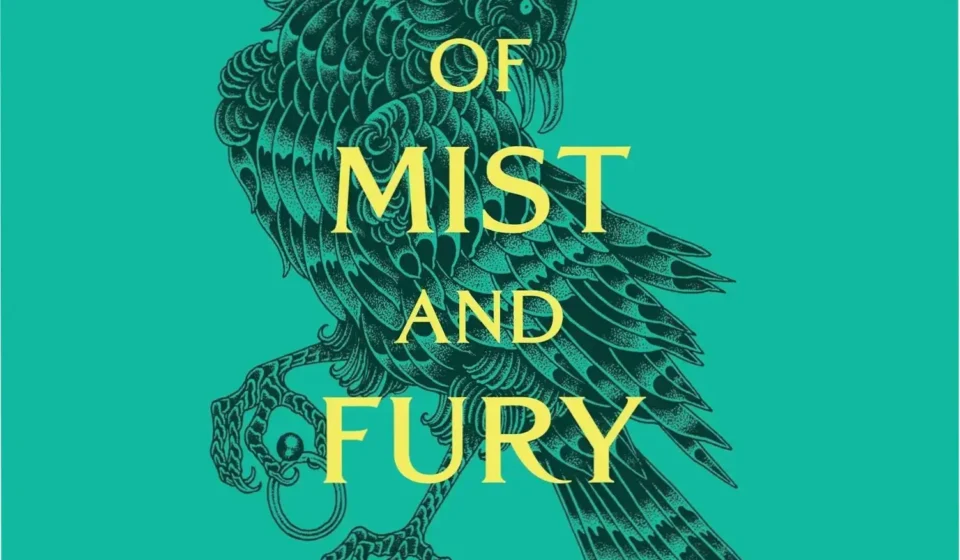

Most sequels struggle to escape the shadow of the first installment, often repeating the same beats to play it safe. Readers usually enter a second book expecting more of the same romantic tension and world-building, only to be surprised when the story pivots toward something far more visceral: the psychological aftermath of survival.
Sarah J. Maas does exactly this in A Court of Mist and Fury, transforming a high-fantasy romance into a nuanced study of trauma and recovery. If you are looking to see how the narrative evolves from the first book, you can check the current reader reception and availability here.
Ready to dive into “A Court of Mist and Fury”?
Explore available editions, check current live pricing, or download a free sample directly on Amazon.
Preview Free Sample & Check Price on Amazon
*You will be redirected to Amazon. As an Amazon Associate, we may earn from qualifying purchases.
The Anatomy of Healing: Narrative Structure and Pacing
The book doesn’t start with a bang; it starts with a suffocating silence. Maas captures the “hollowness” of PTSD with surprising accuracy. Feyre isn’t just sad; she is fragmented.
The pacing is a deliberate slow-burn. While the first book was about the thrill of the hunt and the danger of the mountain, this volume is about the internal war of a woman trying to remember how to breathe.
Skeptics often argue that the plot drags in the middle. However, this “drag” is a narrative tool. It mirrors the slow process of healing, making the eventual payoff feel earned rather than rushed.
“The most dangerous thing about this book isn’t the magic or the politics—it’s the way it dismantles the ‘perfect’ romance from book one to reveal something toxic.”
The “Tamlin Twist”: Expectation vs. Reality
If you entered this book expecting a fairy-tale marriage, you’re in for a shock. Maas pulls a brilliant bait-and-switch regarding the character of Tamlin.
The transition from “Protective Hero” to “Overbearing Jailer” is handled with a surgical precision that sparks endless debates on Reddit and Goodreads. It challenges the reader’s perception of love versus possession.
This shift transforms the book from a standard fantasy into a commentary on emotional abuse. It’s a risky move that pays off by giving Feyre a genuine arc of empowerment.
| Perspective | Book 1 (ACOTAR) | Book 2 (ACOMAF) |
|---|---|---|
| Dynamic | Survival and Attraction | Healing and Autonomy |
| Tone | Urgent and Atmospheric | Introspective and Political |
| Conflict | External (The Curse) | Internal (Trauma) & External (War) |
The Rhysand Dynamic and Literary Insights
Rhysand is the catalyst for the story’s evolution. He doesn’t “save” Feyre in the traditional sense; he provides the tools and the space for her to save herself.
Their relationship is built on a foundation of equality and shared trauma. This is where the “Sexy, action-packed” marketing meets actual character development.
The dialogue is sharp, often playful, and serves as a counterbalance to the heavy themes of death and political maneuvering. It’s a masterclass in romantic tension that avoids becoming cloying.
Technical Analysis: The Audiobook Experience
With a listening length of over 23 hours, the audiobook is a commitment. Jennifer Ikeda’s narration is a critical component of the experience.
Ikeda manages to differentiate the voices of the High Lords without resorting to caricatures. Her delivery of Feyre’s internal monologue captures the fragility and the growing strength of the protagonist.
For those who find the physical page-count daunting, the audio format enhances the emotional beats, especially during the high-tension political confrontations.
Reader Scorecard: Who is this for?
This isn’t just a “teen” book. While categorized as Young Adult/New Adult, the themes of mental health and political betrayal resonate with a much wider audience.
If you enjoy “enemies-to-lovers” tropes but want actual substance behind the romance, this is the gold standard of the genre.