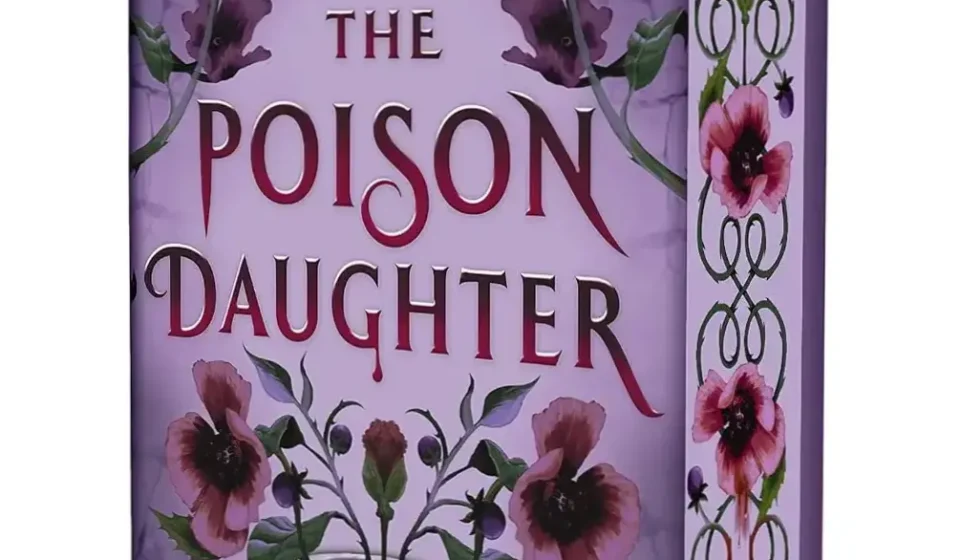

Most “enemies-to-lovers” romances follow a predictable script: a misunderstanding, a few sparks of tension, and an inevitable surrender. But the real psychological draw isn’t the romance itself; it’s the fantasy of being truly seen—and accepted—by someone who isn’t terrified of your darkest parts. We spend our lives masking our “poison,” and the idea of a partner who is immune to our toxicity is a powerful, almost primal, emotional hook.
Sheila Masterson takes this concept literally in “The Poison Daughter,” turning a metaphor for destructive traits into a deadly biological weapon. For those tracking the current “Romantasy” explosion, this title positions itself as a high-stakes study of feminine rage and survival. Before diving into the technicalities of the plot, it’s worth checking the current reader reception and available editions to see if the deluxe version’s sprayed edges are worth the premium.
Ready to dive into “The Poison Daughter”?
Explore available editions, check current live pricing, or download a free sample directly on Amazon.
Preview Free Sample & Check Price on Amazon
*You will be redirected to Amazon. As an Amazon Associate, we may earn from qualifying purchases.
The Anatomy of “Feminine Rage” as a Plot Device
Harlow Carrenwell isn’t your typical “misunderstood” heroine. She is a professional assassin for her parents and a vigilante who hunts abusive men. Her weapon? A kiss that kills. This isn’t just a gimmick; it’s a manifestation of “feminine rage.”
The narrative succeeds because it doesn’t try to “cure” Harlow’s lethality immediately. Instead, it explores the utility of being a monster in a world designed to oppress women. The tension doesn’t come from her learning to be “good,” but from her meeting Henry Havenwood—the one man who doesn’t die when she touches him.
This flip in power dynamics is where the book earns its 4.6-star rating. The “touch her and die” trope is inverted. For the first time, Harlow is vulnerable because her primary defense is useless. It forces a psychological intimacy that is far more compelling than a standard romance.
Pacing and the “Slowburn” Logistics
At 672 pages, “The Poison Daughter” is a behemoth. In the world of modern publishing, this length often suggests “filler,” but Masterson uses the space to build a claustrophobic atmosphere.
The pacing is deliberately slow. The “slowburn” isn’t just about the physical attraction; it’s about the strategic game of cat-and-mouse between Harlow and Henry. They are trapped in a fortress surrounded by vampire-infested woods, which serves as a perfect pressure cooker for the “forced proximity” trope.
However, a skeptical reader might find the mid-section slightly repetitive. The cycle of “secret-keeping” and “near-discovery” can feel like it’s looping. But for the target audience—those who live for the tension of “will they/won’t they”—this is exactly the delivery they expect.
| Technical Element | Execution | Impact |
|---|---|---|
| World Building | Lunameade & Vampire Woods | Atmospheric, slightly gothic |
| Character Arc | Vigilante to Partner | latest reader reviews on Amazon.
Final Editorial Verdict“The Poison Daughter” delivers on its core promise for its intended audience, offering compelling insights without fluff. As highlighted in our detailed edition breakdown, its practical depth and readability are its greatest strengths. We also recommend checking the official Kindle sample and reader ratings before making your final purchase decision. *You will be redirected to Amazon. As an Amazon Associate, we 
|