
Most people treat UFOs as the playground of conspiracy theorists and AI as a productivity tool for the corporate world. We keep these two boxes separate: one is “fringe,” the other is “future.”
However, the real tension lies where these boxes overlap. D. W. Pasulka suggests that the “non-human intelligence” we seek in the stars might be the same force driving our obsession with synthetic minds and digital immortality. If you are tired of the same old “disclosure” tropes, you can check the current reception of The Others to see if this academic approach hits the mark.
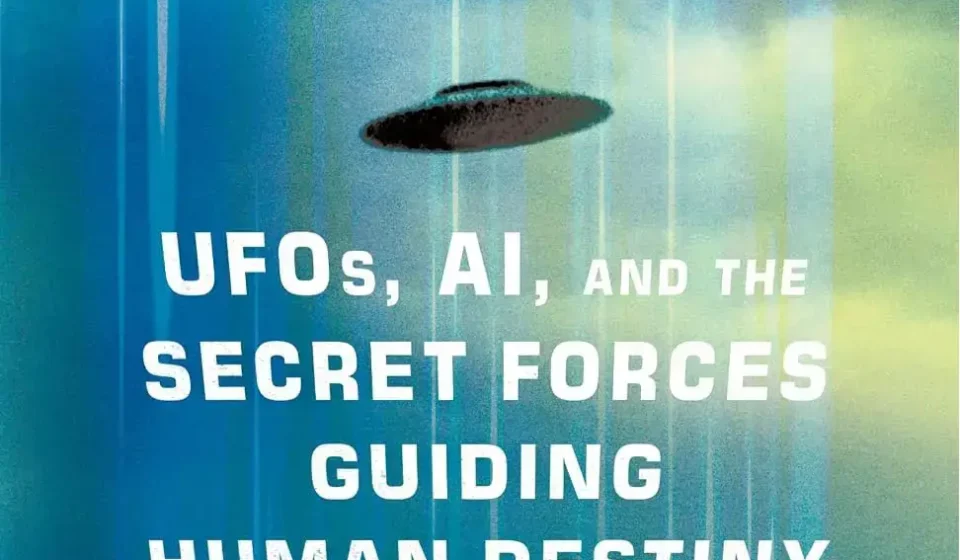
Ready to dive into “The Others: UFOs, AI, and the Secret Forces Guiding Human Destiny”?
Explore available editions, check current live pricing, or download a free sample directly on Amazon.
Preview Free Sample & Check Price on Amazon
*You will be redirected to Amazon. As an Amazon Associate, we may earn from qualifying purchases.
Academic Rigor vs. Fringe Obsession
Pasulka isn’t your typical UFO enthusiast. She is a scholar of religious studies. This distinction is critical for the reading experience.
She doesn’t approach the subject by trying to “prove” aliens exist. Instead, she analyzes the architecture of belief. She treats the UFO phenomenon as a modern mythology that mirrors ancient religious experiences.
For the skeptical reader, this is a relief. You aren’t being sold a conspiracy theory; you are being given a sociological map of how humanity perceives “The Other.”
The writing is direct, though it occasionally leans into the atmospheric. Pasulka manages to keep a foot in the ivory tower while wading through the mud of suppressed histories.
The Synthetic-Sacred Bridge
The most provocative part of the book is the link between UAPs and Artificial Intelligence. Pasulka argues that our drive to create AI is not just about efficiency.
It is, in her view, a subconscious attempt to replicate the non-human intelligence that some claim has been visiting us for millennia.
She explores the “dream of immortality” and life extension. The book posits that the boundary between biological consciousness and synthetic intelligence is the new frontier of the sacred.
“The next phase of human evolution may already be underway, not through biology, but through the integration of the synthetic and the spiritual.”
This section is where the book moves from a history lesson to a philosophical challenge. It asks if we are creating AI to communicate with something that is already here.
Technical Breakdown: The Book’s Blueprint
To understand the value proposition of this read, we need to look at the specifications versus the actual delivery.
| Feature | Analysis | Verdict |
|---|---|---|
| Length | 288 pages | Lean. No fluff. High information density. |
| Approach | Interdisciplinary (Religion + Tech) | Fresh. Avoids the “alien abduction” clichés. |
| Evidence | Interviews & Suppressed Histories | Circumstantial but intellectually stimulating. |
| Pacing | Fast, episodic structure | Easy to consume in short bursts. |
The Catholic Connection and Historical Patterns
Pasulka opens with a fascinating deep dive into 20th-century Catholic visionaries. She highlights a specific pattern: the prediction of a “new intelligence.”
She connects these religious prophecies to the visions of science fiction giants like Arthur C. Clarke.
The argument is that we reached a “critical threshold” in the 21st century
Who Should Actually Read This Book?
This isn’t a book for the casual conspiracy theorist looking for “leaked” government documents or grainy photos of saucers. It’s far too intellectual for that.
The ideal reader is someone who sits at the intersection of three specific interests:
- Theological Curiosity: Those who view UFOs not as “nuts and bolts” ships, but as metaphysical or spiritual entities.
- AI Futurism: People obsessed with the Singularity and how synthetic intelligence might mirror ancient descriptions of “angels” or “demons.”
- Academic Skepticism: Readers who appreciate a scholar’s approach to “fringe” topics without the typical sensationalism.
Who Should Skip It?
If you are a hard-line materialist who demands peer-reviewed physical evidence before entertaining a thought, you will find Pasulka’s approach frustrating. She deals in “architectures of belief” and “suppressed histories,” not laboratory data.
Similarly, skip this if you are looking for a fast-paced thriller. While the narrative is compelling, the pace is measured and analytical. It is a study, not a novel.
Common Purchasing Missteps
The biggest mistake buyers make is expecting a “smoking gun” revelation. Pasulka isn’t claiming to have a crashed craft in her garage.
She is analyzing the pattern of how humanity perceives non-human intelligence. If you buy this expecting a manual on how to contact aliens, you’ll be disappointed. If you buy it to understand why the world’s most powerful tech leaders are obsessed with “The Others,” you’ll find it invaluable.
Quick Contextual FAQ
| Question | Analytical Answer |
|---|---|
| Is this a religious book? | No. It uses religious studies as a lens to analyze modern phenomena. |
| Does it focus on AI? | Yes, specifically how AI serves as a bridge to the “non-human” intelligence Pasulka describes. |
| Is it a long read? | At 288 pages, it’s concise. It favors density over fluff. |
Editorial Verdict: The Bottom Line
Pasulka succeeds in bridging the gap between the mystical and the mechanical. She doesn’t try to “prove” the impossible; instead, she maps the territory where science and the sacred overlap.
The value lies in the synthesis. By linking Catholic visionaries to modern AI development, she provides a framework for understanding the 21st century’s obsession with transcendence and immortality.
For those ready to challenge their definition of “intelligence,” it is a high-ROI investment of time. You can explore current pricing and read unfiltered customer experiences via the official Amazon listing.
Final Editorial Verdict
“The Others: UFOs, AI, and the Secret Forces Guiding Human Destiny” delivers on its core promise for its intended audience, offering compelling insights without fluff. As highlighted in our detailed edition breakdown, its practical depth and readability are its greatest strengths.
We also recommend checking the official Kindle sample and reader ratings before making your final purchase decision.
*You will be redirected to Amazon. As an Amazon Associate, we earn from qualifying purchases.