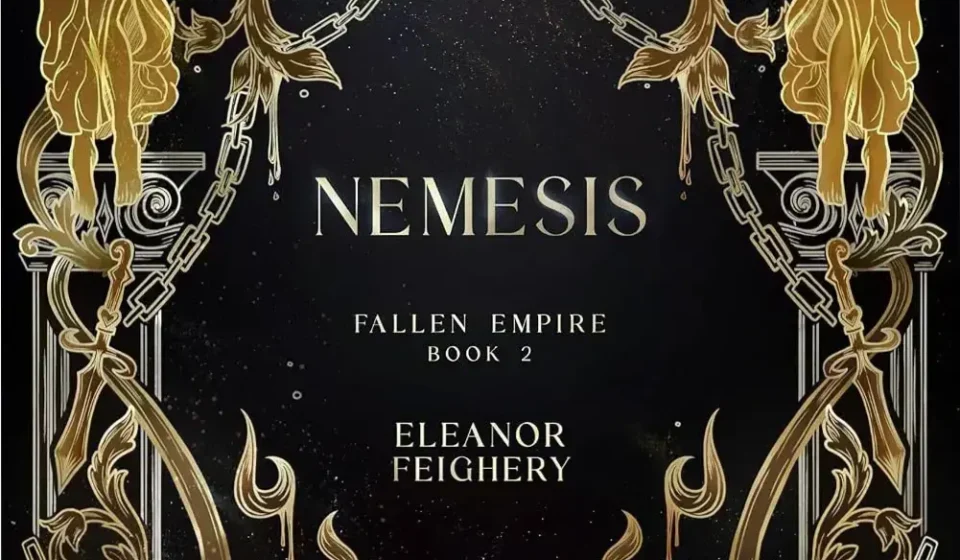

Dark romance isn’t about a healthy relationship; it’s about the intoxicating tension of finding safety in the most dangerous place possible. Readers often seek a specific psychological release: the idea of a “monster” who is ruthless to the world but completely devoted to one person.
Eleanor Feighery taps into this craving with “Nemesis,” a story that strips away the polish of high-society Bratva tropes and throws its protagonists into a gritty, claustrophobic basement. You can see how this visceral approach has resonated with the community by checking the current reader reception and availability.
Ready to dive into “Nemesis: A Dark Bratva Romance”?
Explore available editions, check current live pricing, or download a free sample directly on Amazon.
Preview Free Sample & Check Price on Amazon
*You will be redirected to Amazon. As an Amazon Associate, we may earn from qualifying purchases.
The Anatomy of a “Monster” Protector
The narrative hook is lean and mean. We have a protagonist who professionalizes pain—a man who breaks people in basements. This isn’t your typical “misunderstood” hero; he is an active participant in the darkness.
The shift occurs when he is locked in with Octavia. The chemistry isn’t built on soft words, but on mutual survival and a shared sense of fury. It’s a high-stakes power dynamic that avoids the cliché of the “damsel in distress.”
Octavia is a ruined ballerina. Her knee is gone, her identity is a question mark, but her spirit is intact. This creates a compelling symmetry: two broken weapons forced into the same cage.
“Nobody has ever bled for me before. She doesn’t get to take it back.”
This line encapsulates the core of the book. The romance isn’t founded on love at first sight, but on a debt of blood. In the dark romance genre, this is the ultimate currency.
Pacing, Tension, and the “Captive” Trope
At 522 pages, the book has room to breathe, but it doesn’t linger unnecessarily. The pacing mirrors the claustrophobia of their environment, alternating between psychological warfare and explosive violence.
Feighery manages the “captive romance” trope without making it feel repetitive. The mystery of Octavia’s true identity provides a narrative engine that keeps the plot moving forward while the romantic tension simmers.
The “touch-her-and-die” energy is dialed up to eleven. For the target audience, this is the primary draw. The transition from “I feel nothing” to “I will tear through everyone for her” is handled with a believable, slow-burn intensity.
| Feature | Analysis | Verdict |
|---|---|---|
| Pacing | Fast-paced with high stakes | Excellent |
| Trope Execution | Dark Bratva / Forced Proximity | Top Tier |
| Character Depth | Strong emotional arcs for both | Strong |