
Most of us look at the chaos of modern history—the sudden rise of totalitarian regimes, global pandemics, and systemic economic collapses—and see a series of unfortunate, random coincidences. We try to make sense of the world through political science or sociology, yet there is always a lingering feeling that something deeper, perhaps something invisible, is pulling the strings.
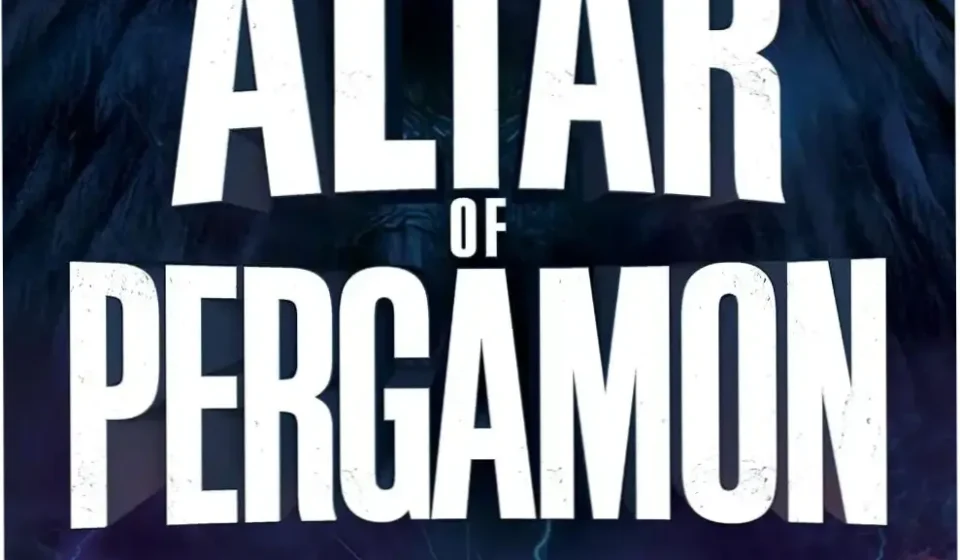
This is where Jonathan Cahn steps in. He doesn’t offer a textbook on history; he offers a key to a lock we didn’t know existed. For readers who have spent years chasing the “hidden truth” behind world events, The Altar of Pergamon promises a revelation that transcends standard conspiracy theories, blending biblical prophecy with a global scavenger hunt.
Ready to dive into “The Altar of Pergamon”?
Explore available editions, check current live pricing, or download a free sample directly on Amazon.
Preview Free Sample & Check Price on Amazon
*You will be redirected to Amazon. As an Amazon Associate, we may earn from qualifying purchases.
The Narrative Engine: A Skeptic’s Descent
Cahn makes a strategic choice here. Instead of presenting a dry theological treatise, he wraps his claims in a narrative. He introduces us to Ariel Herzog, a professional skeptic whose entire career is built on debunking the supernatural.
This is a classic literary device: the “proxy for the reader.” By starting with a skeptic, Cahn anticipates the reader’s own doubts. We aren’t asked to believe blindly; we are invited to watch Herzog be dismantled by evidence he cannot explain.
The plot kicks off with a cryptic page from a secret book. This serves as the “inciting incident” that transforms a static academic debate into a high-stakes global chase. It’s a structure that feels familiar to fans of Dan Brown, but with a spiritual weight that changes the stakes.
The pacing is designed for the modern attention span. Cahn uses short chapters and frequent “revelations” to keep the reader moving. The transition from New York to Istanbul and then to Moscow creates a sense of momentum that mimics a cinematic experience.
The “Real-World” Connection: History as a Puzzle
The most controversial and compelling aspect of the book is its insistence that it is not fiction. Cahn doesn’t just tell a story; he claims the story is a vehicle for a real mystery that has shaped human history.
He links the Altar of Pergamon to the darkest chapters of the 20th century. He suggests that the rise of Adolf Hitler, the horrors of the Holocaust, and the spread of Marxism aren’t just political failures, but manifestations of a spiritual influence.
“The mystery it reveals is not fiction. It’s real… It has already altered the course of world history.”
From a critical perspective, this is a bold claim. It moves the book from the “Mystery/Suspense” genre into the realm of “Alternative History” or “Prophetic Analysis.” For some, this will be a thrilling revelation; for others, it will be a hard pill to swallow.
The book attempts to connect the “Dark Angel” to a series of global events, creating a unified theory of evil. It suggests that there is a “Dark Priesthood” and an “Ancient Matrix” operating behind the scenes of our governments and institutions.
| Key Element | Narrative Function | Claimed Real-World Link | ||||||
|---|---|---|---|---|---|---|---|---|
| Ariel Herzog | The Skeptic / POV Character | The intellectual struggle with faith | ||||||
The Altar of Pergamon
Who Should Actually Read This Book?The Altar of Pergamon is not a standard theological treatise or a simple beach novel. It is a hybrid. It targets a very specific intersection of readers: those who are fascinated by biblical prophecy, geopolitical conspiracies, and the “hidden history” of the world. If you enjoy the puzzle-solving pace of The Da Vinci Code but find the secular approach lacking, or if you follow the work of Jonathan Cahn and his theories on prophetic patterns, this is your primary target. Who Should Skip ItTo avoid buyer’s remorse, be honest about your reading preferences. You should probably skip this book if:
Common Purchasing MisstepsThe biggest mistake readers make with Cahn’s work is expecting a manual or a dry analysis. This is a conceptual journey. Don’t buy this expecting a chronological history of the Soviet Union; buy it if you want a spiritual lens to reinterpret why those events happened. Quick Analysis FAQ
Editorial ConclusionJonathan Cahn has created a provocative piece of literature that challenges the linear way we view history. By blending a global thriller plot with prophetic analysis, he makes complex geopolitical theories digestible. While skeptics will find the leaps of faith too wide, the intended audience will find it revelatory. Ultimately, the book’s value lies in its ability to make you question the “invisible” forces shaping current events. If you are ready to explore the intersection of the supernatural and global politics, we suggest you check the current reader ratings on Amazon to see how other prophecy enthusiasts are reacting to these revelations. Final Editorial Verdict“The Altar of Pergamon: The Mystery of the Dark Angel and the Future of the World” delivers on its core promise for its intended audience, offering compelling insights without fluff. As highlighted in our detailed edition breakdown, its practical depth and readability are its greatest strengths. |