
Most of us spend years building a life that looks perfect on paper, only to wake up one morning and realize we are utterly miserable. We call it burnout, a mid-life crisis, or simply the crushing weight of expectations. We crave a “reset button,” but in reality, those pivots rarely happen without a catalyst—something jarring enough to break the routine.
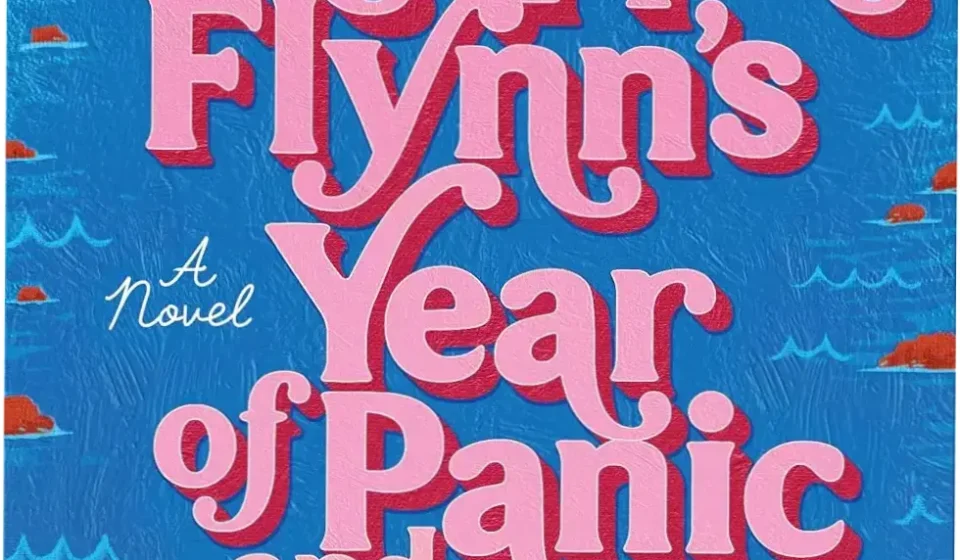
Jacqueline Firkins uses a literal sinkhole to trigger this transition in “Philippa Flynn’s Year of Panic and Piracy.” It is a bold, almost absurd metaphor for the collapse of a carefully curated existence. For readers seeking a blend of academic tension and seaside escapism, checking the current reader reception on Amazon reveals a pattern: this isn’t just a romance; it’s a study on the courage required to be mediocre at something new.
Ready to dive into “Philippa Flynn’s Year of Panic and Piracy”?
Explore available editions, check current live pricing, or download a free sample directly on Amazon.
Preview Free Sample & Check Price on Amazon
*You will be redirected to Amazon. As an Amazon Associate, we may earn from qualifying purchases.
The Anatomy of a “Comfort Read”: Style and Pacing
Let’s be honest: the “small town romance” genre is crowded with clichés. We have the burnt-out professional, the inherited house, and the unexpected roommate. Firkins doesn’t try to reinvent the wheel here; instead, she polishes it until it shines.
The pacing is deliberate. It doesn’t rush the romance, which is a relief. The narrative breathes, allowing the tension between Philippa’s rigid academic world and Dylan’s fluid, visual world to simmer.
The prose is witty, leaning heavily into the contrast between Philippa’s internal monologue—which is structured like a lecture—and the chaotic reality of her new life. It’s a “swoonworthy” experience, but it avoids the saccharine trap by grounding the characters in real insecurity.
If you are looking for a high-stakes thriller, this isn’t it. This is a slow-burn exercise in character development. The “panic” in the title is less about terror and more about the vertigo of losing one’s identity.
The Clash of Archetypes: Academic Rigor vs. Visual Allure
The core of the novel’s magnetism lies in the pairing of Philippa and Dylan. On one side, you have a history professor who views the world through facts, dates, and footnotes. On the other, a former cover model who has spent his life being the “face” of someone else’s fantasy.
This creates a fascinating power dynamic. Philippa initially dismisses Dylan as a superficial ornament, while Dylan struggles with the invisibility that comes after the spotlight fades. Their collaboration on the pirate novels serves as a bridge between their two worlds.
The irony is palpable: they are trying to write a romance novel while actively avoiding the romantic tension sparking between them. It’s a meta-narrative that mocks the very tropes it employs, which gives the book a layer of sophistication often missing from “beach reads.”
| Character | Primary Conflict | Worldview | Growth Arc |
|---|---|---|---|
| Philippa Flynn | Professional burnout / Rigid control | Fact-based, skeptical, structured | Learning to embrace spontaneity |
| Dylan | Writer’s block / Identity crisis | Intuitive, visual, underestimated | Finding a voice beyond his image |
Narrative Structure: The “Pirate” Meta-Plot
The plot is cleverly layered. You have the primary romance (Philippa and Dylan) and the secondary creative project (the six pirate novels). This structure prevents the story from feeling like a repetitive cycle of “will-they-won’t-they.”
The pirate theme isn’t just window dressing. It represents the freedom that both characters lack. Piracy is about breaking rules, taking risks, and sailing into uncharted waters—exactly what a tenure-track professor and a faded model need to do in their personal lives.
However, some readers on platforms like Goodreads have noted that the “writing a book” subplot can occasionally overshadow the emotional development. But for
Who Should Actually Read This Book?
This isn’t a book for everyone. It occupies a specific niche of “comfort reading” that blends academic rigidity with romantic whimsy. If you enjoy the “opposites attract” trope—specifically the friction between a structured, logical mind and a free-spirited creative—this is a safe bet.
The ideal reader is someone currently feeling the weight of professional burnout. Philippa’s journey from a stifling tenure track to a seaside house is a fantasy for anyone who has ever wanted to quit their job and move to the coast. It appeals to those who prefer character-driven narratives over high-octane plots.
Who Should Skip It
You should probably pass on this novel if:
- You crave gritty realism: This is a “swoonworthy” novel. If you find “small-town charm” clichés irritating, the setting will feel too sanitized.
- You want a complex historical study: Despite the protagonist being a history professor, the “history” here serves as a backdrop for romance, not a scholarly deep dive.
- You hate forced proximity: The plot relies heavily on the “sharing a house” trope. If that feels contrived to you, the tension won’t land.
Value for Money & Realistic Expectations
At 296 pages, this is a lean read. You aren’t paying for 600 pages of filler; you’re paying for a focused, atmospheric arc. In terms of value, it functions perfectly as a “palette cleanser” between heavier books.
Common purchasing misstep: Do not mistake this for a manual on overcoming writer’s block or a guide to academic career changes. It is a romance novel first and a story of self-discovery second. Expect a predictable but satisfying trajectory rather than a subversive literary experiment.
Editorial Verdict
Jacqueline Firkins manages to avoid the typical traps of the genre by giving her characters genuine internal conflicts. The tension between “facts” (Philippa) and “feeling” (Dylan) provides a necessary intellectual layer to the romance.
It is a polished, efficient piece of fiction that delivers exactly what it promises: a witty escape. If you are looking for a low-stress, high-reward reading experience, it’s worth the investment. You can check the current reader sentiment and live pricing on the official Amazon page.
Final Editorial Verdict
“Philippa Flynn’s Year of Panic and Piracy: A Novel” delivers on its core promise for its intended audience, offering compelling insights without fluff. As highlighted in our detailed edition breakdown, its practical depth and readability are its greatest strengths.
We also recommend checking the official Kindle sample and reader ratings before making your final purchase decision.
*You will be redirected to Amazon. As an Amazon Associate, we earn from qualifying purchases.