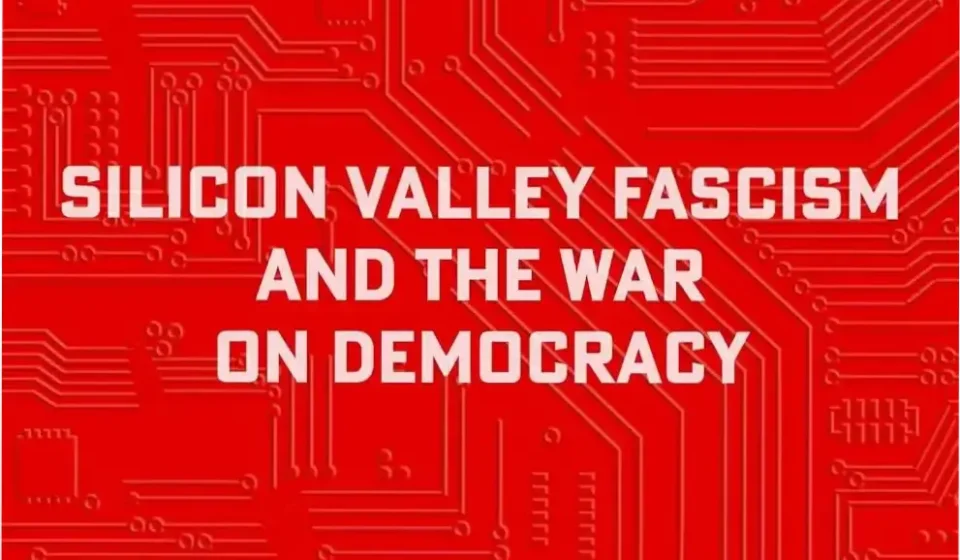

We’ve been conditioned to view Silicon Valley as a playground for eccentric geniuses solving the world’s problems with a few lines of code. We accept the mantra of “moving fast and breaking things” as a necessary quirk of innovation, assuming the “things” being broken are just outdated industries or inefficient bureaucracies.
But what happens when the “things” being broken are the fundamental pillars of democratic governance? Gil Durán suggests that the chaos isn’t a side effect of progress, but a calculated strategy. For those tracking the intersection of big tech and political power, checking the early reception of The Nerd Reich reveals a chilling thesis: we aren’t entering a digital utopia, but a era of digital feudalism.
The book arrives not as a theoretical exercise, but as an urgent autopsy of a movement that has already infiltrated the highest levels of government. It challenges the reader to stop seeing billionaires as mere investors and start seeing them as architects of a new, corporate-led political order.
Ready to dive into “The Nerd Reich”?
Explore available editions, check current live pricing, or download a free sample directly on Amazon.
Preview Free Sample & Check Price on Amazon
*You will be redirected to Amazon. As an Amazon Associate, we may earn from qualifying purchases.
The Architecture of Digital Feudalism
Durán doesn’t waste time with pleasantries. He strips away the “techno-optimist” veneer to reveal a core drive: the replacement of elected officials with corporate rule. This isn’t a conspiracy theory; it’s a documented ambition.
The book analyzes how tools like cryptocurrency and AI are not just financial or productivity assets. In the hands of the “modern apostles,” they are instruments of secession. They aren’t trying to fix the system; they are building a parallel one where they hold all the keys.
The narrative structure moves from the granular—San Francisco’s weaponized local elections—to the global stage. It shows a pattern of “beta testing” authoritarianism in small jurisdictions before scaling it to the national level.
“Democracy is being dismantled not by coups or tanks, but by code, capital, and the illusion of innovation.”
This quote encapsulates the book’s central anxiety. The danger isn’t a sudden collapse, but a gradual erosion where the public doesn’t even realize the transition from citizen to “user” of a corporate state has occurred.
The Intellectual Pedigree: From Theory to Practice
One of the most valuable aspects of the book is Durán’s dive into the philosophical roots of the movement. He points directly to The Sovereign Individual by James Dale Davidson and Lord William Rees-Mogg.
For the uninitiated, this text serves as the “bible” for the tech-elite. It predicts a world where individuals with high cognitive ability and technological mastery can escape the “tax-collecting” state.
Durán tracks how this 90s-era theory became the operational manual for figures like Peter Thiel and Balaji Srinivasan. He argues that their pursuit of “technological liberation” is actually a pursuit of absolute power, devoid of any social contract.
The analysis is skeptical and sharp. It asks: who is actually being “liberated”? The answer, as Durán meticulously proves, is a tiny sliver of the ultra-wealthy, while the rest of us are relegated to a digital peasantry.