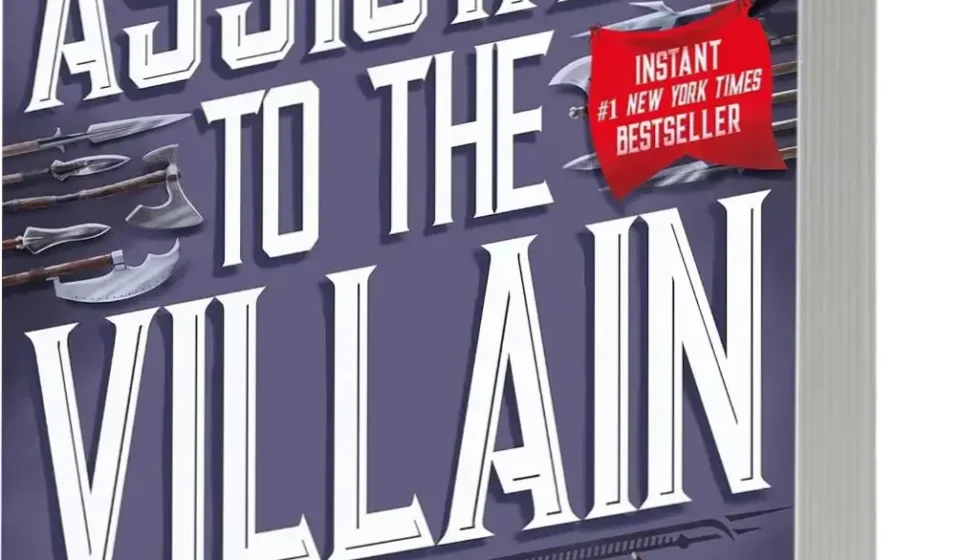

Most of us have spent a Monday morning staring at a spreadsheet, wondering if there is any career path more rewarding than the corporate grind. Usually, that fantasy involves a beach in Bali, not a dungeon filled with severed heads. But there is a specific, modern craving for “competence porn”—the satisfaction of watching someone be exceptionally good at a chaotic job—that makes the idea of being a Villain’s assistant strangely appealing.
Hannah Nicole Maehrer taps into this collective burnout with Assistant to the Villain, a story that treats world domination like a mid-level management crisis. It is less about the high stakes of fantasy warfare and more about the high stakes of office politics, where the ” quarterly reviews” might actually involve a death trap.
Ready to dive into “Assistant to the Villain”?
Explore available editions, check current live pricing, or download a free sample directly on Amazon.
Preview Free Sample & Check Price on Amazon
*You will be redirected to Amazon. As an Amazon Associate, we may earn from qualifying purchases.
The TikTok Pipeline: Style and Pacing
Let’s be skeptical for a second. When a book is born from a viral TikTok series, the red flags usually include a lack of narrative structure and a reliance on “vibes” over plot. Maehrer avoids the worst of these pitfalls, but the influence of the platform is undeniable.
The prose is snappy. It is designed for quick consumption. The dialogue moves at a breakneck speed, mirroring the rhythm of a sitcom rather than a traditional epic fantasy. If you are looking for the lyrical depth of Tolkien or the gritty realism of George R.R. Martin, you are in the wrong dungeon.
However, for the target audience, this is a feature, not a bug. The pacing is aggressive in a way that keeps the pages turning. The humor relies heavily on the juxtaposition of the mundane (scheduling meetings, managing payroll) and the macabre (random mayhem and terror). It is “The Office” if Michael Scott had a death ray and a penchant for dramatic capes.
The writing style prioritizes character chemistry over world-building. We don’t get deep lore dumps about the kingdom of Rennedawn because the author knows we aren’t here for the geography. We are here to see if the sunshine-optimist Evie can crack the shell of her terrifying boss.
The “Sunshine x Grumpy” Dynamic: A Technical Breakdown
The core of the book is the classic romantic trope: the “Sunshine” (Evie) and the “Grumpy” (The Villain). On paper, it is a cliché. In execution, it works because it leans into the absurdity of the power dynamic.
Evie Sage isn’t just a passive observer; she is the operational glue holding a chaotic empire together. There is a subtle psychological satisfaction in seeing the “Evil Villain” be completely undone by a woman who just wants the office to run efficiently. It flips the script on the traditional damsel-in-distress narrative.
The romantic tension is a slow burn, though “slow” is relative here. The chemistry is built on mutual competence. The Villain respects Evie because she is the only person who doesn’t tremble in fear—or, more accurately, the only one who can handle his temperamental outbursts while simultaneously organizing his files.
“Don’t find evil so attractive, Evie.”
This internal conflict drives the first half of the book. The attraction isn’t based on a “I can fix him” mentality, but rather a “we are both weirdly suited for this madness” realization. It is a modern take on the workplace romance that replaces the water cooler with a pit of vipers.
Expectation vs. Reality: The Genre Blur
Many readers approach this as a “Fantasy Novel.” It is not. It is a “Romantic Comedy with Fantasy Elements.” This distinction is crucial for managing expectations.
If you expect a complex magic system or a geopolitical struggle for the throne, you will be disappointed. The “fantasy” part of the book serves primarily as a backdrop for the character beats. The stakes are real—there is sabotage and danger—but the tone remains light enough that you never truly fear for the protagonists.
The reality is that this book functions as a “comfort read.” It provides an escape not into a different world, but into a different version of our own stressful professional lives. It validates the feeling that your boss is a monster, but suggests that if you’re good enough at your job, you might just become indispensable to the monster.
| Question | Analytical Answer |
|---|---|
| Is the world-building deep? | No. It’s functional. It provides enough context to support the jokes and the romance, but doesn’t aim for epic scale. |
| Is the humor subjective? | Yes. It relies on modern wit and situational irony. If you don’t like “The Office” style humor, the jokes will miss. |
| Value for money? | High, provided you enjoy the genre. At 352 pages, it’s a brisk read with a high entertainment-to-effort ratio. |
Editorial Verdict
Hannah Nicole Maehrer has successfully translated viral energy into a cohesive narrative. While it lacks literary depth, it excels in charisma. It is the literary equivalent of a comfort show: easy to digest, predictable in its beats, but genuinely charming.
If you want a low-stress read that balances absurdity with romantic tension, it’s a solid pick. You can check current pricing and read verified buyer experiences via this official product page.
Final Editorial Verdict
“Assistant to the Villain” delivers on its core promise for its intended audience, offering compelling insights without fluff. As highlighted in our detailed edition breakdown, its practical depth and readability are its greatest strengths.
We also recommend checking the official Kindle sample and reader ratings before making your final purchase decision.
*You will be redirected to Amazon. As an Amazon Associate, we earn from qualifying purchases.