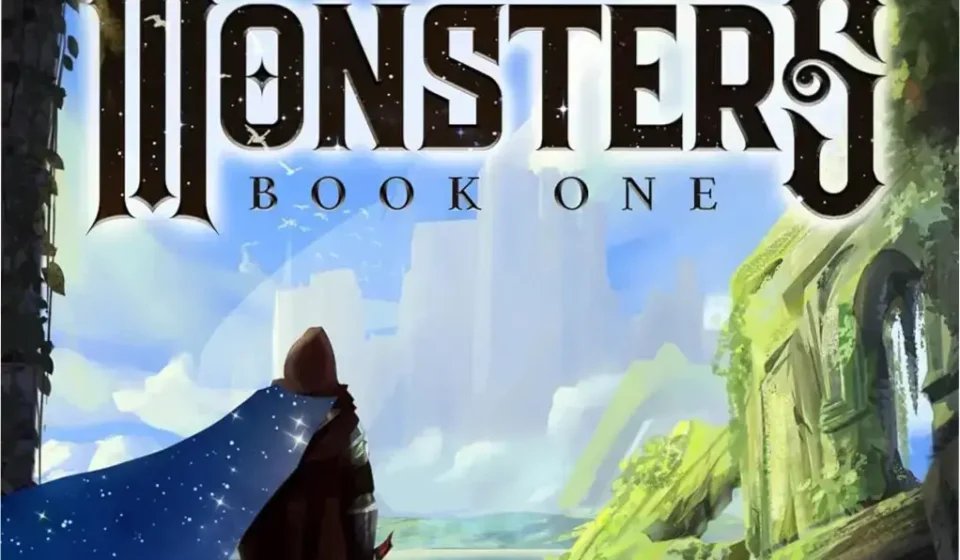

Most of us have spent at least one Monday morning staring at a spreadsheet, wondering if there is a version of existence where our skills actually matter. The corporate grind is a slow erosion of agency, where “middle management” is often just a fancy term for being the shock absorber between executives and the actual work. This specific brand of existential dread is the psychological hook that makes the Isekai genre—stories about being transported to another world—so addictive.
When a story promises a total reset, the expectation is usually a power fantasy. However, He Who Fights with Monsters doesn’t just offer a new world; it offers a complex, often brutal system of growth that mirrors the struggle for competence in the real world. Before diving into the mechanics of Jason Asano’s journey, it is worth checking the current reader reception and availability on Amazon to see why this specific series exploded from a web serial into a Kindle powerhouse.
Ready to dive into “He Who Fights with Monsters”?
Explore available editions, check current live pricing, or download a free sample directly on Amazon.
Preview Free Sample & Check Price on Amazon
*You will be redirected to Amazon. As an Amazon Associate, we may earn from qualifying purchases.
The “Anti-Hero” Paradox and Character Friction
The core tension of the book isn’t just “man vs. monster.” It is “man vs. his own toolkit.” Jason Asano is an Australian middle manager who wakes up in a magical dimension only to discover that his powers are visually and mechanically “evil.”
This creates a fascinating psychological friction. Jason wants to be a good person, but he looks like a nightmare and uses powers that scream “villain.” It is a clever commentary on perception versus reality.
Unlike many LitRPG protagonists who are blank slates for the reader to inhabit, Jason has a loud, sarcastic, and often polarizing personality. He doesn’t just solve problems; he critiques them with a dry wit that can either endear him to you or make you want to punch him.
On platforms like Reddit and Goodreads, this is the most debated point. Some readers find his confidence arrogant; others find it a refreshing break from the “stuttering, shy protagonist” trope common in the genre.
The Progression System: Cultivation Meets Gaming
The book blends traditional LitRPG (stats, levels, and loot) with “Cultivation” elements (internal energy, ranks, and spiritual evolution). This hybrid approach prevents the story from feeling like a mere math equation.
Instead of just “leveling up” by killing ten rats, Jason has to navigate a complex system of essences and awakenings. The power gain feels earned because it requires strategic thinking and a level of adaptability that mirrors his previous professional life.
The “weak-to-strong” arc is handled with restraint. He doesn’t become a god overnight. The struggle is tangible, and the stakes remain high because the world is populated by entities that have been playing this game for centuries.
| Feature | Traditional LitRPG | He Who Fights with Monsters |
|---|---|---|
| Power Gain | XP and Leveling | Essence Fusion & Rank Advancement |
| Combat | Stat-based / Turn-based feel | Synergistic Abilities & Tactical Positioning |
| MC Archetype | Often an “Underdog” | The “Outsider” with a moral dilemma |
Pacing and the “Web Serial” Hangover
We need to be honest about the 680-page length. This book originated on Royal Road, a site for serial fiction. While the transition to Kindle is polished, the “serial” DNA is still present.
This means the pacing can be erratic. There are moments of intense, high-stakes action followed by long stretches of dialogue and political maneuvering. For some, this is “rich world-building.” For others, it is “bloat.”
Who This Book Is Actually ForThis isn’t a generic “power fantasy” where the protagonist becomes a god by chapter three. It is a calculated progression story.
The ideal reader: Someone who enjoys the “grind” of LitRPG, appreciates dry Australian humor, and prefers complex world-building over mindless combat sequences.
Who should skip this: If you find status screens, attribute points, and “game logic” distracting or tedious, stay away. Similarly, if you prefer tight, fast-paced thrillers with minimal dialogue, the conversational pacing here will feel sluggish.
Value for Money: The ROI of 680 Pages
From a purely quantitative perspective, the value is high. At 680 pages, you are getting a massive amount of content that was essentially “beta-tested” by millions of readers on Royal Road before hitting Kindle.
The risk lies in the expectation. A common purchasing misstep is treating this like a short novella or a quick guide to isekai tropes. This is a dense narrative. You aren’t paying for a quick thrill; you’re paying for a deep dive into a systemic magic world.
Quick Reality Check (FAQ)
- Is the MC too “overpowered”? Not instantly. He earns it, though his specific power set is intentionally disruptive to the world’s norms.
- Is the humor forced? It depends on your tolerance for sarcasm. The protagonist is a middle manager; he views the apocalypse through a lens of corporate cynicism.
- Does the LitRPG element overshadow the plot? No. The mechanics serve the story, not the other way around.
Editorial Conclusion: It is a cornerstone of modern progression fantasy. It balances the “math” of LitRPG with genuine character growth and political intrigue. If you have the patience for a slow-burn evolution, it’s a top-tier investment. You can check the current Kindle pricing and user reviews here to see if the style matches your taste.
Final Editorial Verdict
“He Who Fights with Monsters: A LitRPG Adventure” delivers on its core promise for its intended audience, offering compelling insights without fluff. As highlighted in our detailed edition breakdown, its practical depth and readability are its greatest strengths.
We also recommend checking the official Kindle sample and reader ratings before making your final purchase decision.
*You will be redirected to Amazon. As an Amazon Associate, we earn from qualifying purchases.