
Most of us spend our lives clinging to a version of happiness that looks like a checklist: the right career, the perfect partner, and a predictable timeline. But when life pivots—usually through a sudden loss or a crushing failure—that checklist becomes a source of torture rather than a guide.
We often mistake “getting what we want” for “finding peace.” This is where How Lucky Am I steps in, using the unlikely figure of a skeleton to discuss the things we are usually too scared to mention at dinner parties. You can check the current reader reception on Amazon to see how this minimalist approach to grief is resonating with a global audience.
Ready to dive into “How Lucky Am I”?
Explore available editions, check current live pricing, or download a free sample directly on Amazon.
Preview Free Sample & Check Price on Amazon
*You will be redirected to Amazon. As an Amazon Associate, we may earn from qualifying purchases.
The Paradox of Loss: Finding What You Deserve
The core of Christian Watson’s narrative hinges on a provocative premise: the idea that losing what we wanted is actually a prerequisite for finding what we deserve. To a skeptic, this sounds like classic “toxic positivity.” However, the execution avoids the trap of mindless optimism.
By following Mr Skelly, the reader isn’t lectured on resilience. Instead, they witness a journey through “treacherous terrains.” The book frames grief not as a hole to be filled, but as a landscape to be navigated.
The narrative structure is intentionally lean. It doesn’t waste time with complex plot twists because the “plot” is internal. The goal isn’t to reach a destination, but to shift the lens through which the reader views their own scars.
“How lucky am I, to have lost what I wanted, to find what I deserved.”
This single sentence carries the weight of the entire book. It challenges the reader to redefine “luck” from the acquisition of things to the liberation from the wrong things.
Visual Storytelling and the “Mr Skelly” Effect
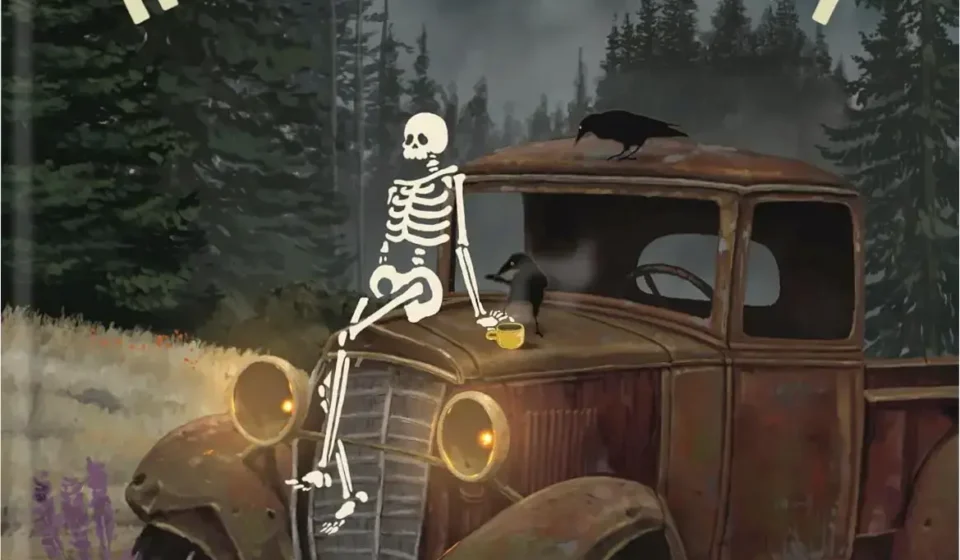
You cannot analyze this book without discussing the art. Hand-painted imagery isn’t just a decorative addition here; it is the primary delivery mechanism for the emotional payload.
Using a skeleton as the protagonist is a brilliant psychological move. A skeleton is the ultimate equalizer—stripped of race, age, and social status. It reminds us that, fundamentally, we are all made of the same bones.
The contrast between the “macabre” image of a skeleton and the “lush landscapes” creates a visual tension that mirrors the experience of finding beauty in the midst of death or loss.
For the modern reader with a decimated attention span, this format is a relief. It allows for “micro-reading”—the ability to absorb a powerful truth in a few seconds of gazing at a page.
| Technical Specification | Detail |
|---|---|
| Format | Hardcover (Premium feel) |
| Length | 128 Pages |
| Core Theme | Love, Loss, and Mindfulness |
| Market Rank | #1 Best Seller in Love & Loss |
| User Rating | 4.4 (Goodreads) / 5.0 (Amazon) |
Pacing and the “Low-Friction” Reading Experience
At 128 pages, this
Who This Book Is Actually For
How Lucky Am I isn’t a textbook on psychology or a rigorous guide to overcoming bereavement. It is an emotional balm.
The ideal reader is someone currently navigating the “messy middle” of loss—where the initial shock has faded, but the void remains. If you appreciate visual storytelling and prefer gentle prompts over aggressive self-help directives, this resonates.
It also appeals to the “social media mindful” crowd—those who followed Mr Skelly’s journey online and want a tactile, permanent version of those reflections to keep on a bedside table.
Who Should Skip This
You should probably pass on this book if:
- You want a clinical roadmap: If you are looking for “5 Steps to Heal Your Grief,” you will find this too abstract.
- You dislike “whimsical” tones: The use of a skeleton protagonist (Mr Skelly) to discuss death is a specific stylistic choice. If that feels too lighthearted for your taste, it won’t land.
- You prioritize word count over art: At 128 pages with significant imagery, this is a lean read. Don’t buy it expecting a dense philosophical tome.
Value Analysis: Art vs. Text
From a purely utilitarian perspective, you aren’t paying for a high volume of information. You are paying for curated perspective and hand-painted art.
The hardcover format is a strategic choice here; the book is designed to be a keepsake, not a disposable paperback. The value lies in the “pause” it forces the reader to take. It’s less about the destination and more about the atmospheric experience of the pages.
Common Purchasing Missteps
The biggest mistake buyers make is treating this as a “manual.” It is a narrative reflection. It doesn’t provide answers; it provides companionship in the form of a gentle character wandering through the same terrains of grief we all face.
Editorial Verdict
Christian Watson has managed to package the heaviest human experiences into something that feels breathable. While it lacks the technical depth of a clinical study, its strength is its accessibility. It validates the feeling of being “broken” while suggesting that the pieces can form something new.
For those wondering if the physical edition is worth the investment over digital scrolls, we suggest checking the latest reader reviews and hardcover pricing to see if the aesthetic value matches your needs.
Final Editorial Verdict
“How Lucky Am I” delivers on its core promise for its intended audience, offering compelling insights without fluff. As highlighted in our detailed edition breakdown, its practical depth and readability are its greatest strengths.
We also recommend checking the official Kindle sample and reader ratings before making your final purchase decision.
*You will be redirected to Amazon. As an Amazon Associate, we earn from qualifying purchases.